As Elbert Hubbard (famously) said don’t take life too seriously – you don’t get out of it alive.
If the sun shines, I would think ‘Beer Garden’. When it rains, I would visit a pub for a while. Or if it’s snowing, I would sit in front of TV with a case of beer.
I’m now starting to think I have a problem with ‘spirit’uality.
Dream, dream, dream! Conduct these dreams into thought, and then transform them into action. – famously said by former President of India Dr. APJ Abdul Kalam.
The Chinese dream. The Greeks dream. Everyone in the world dreams.
The Guardian delves into the realms of what makes a dream real. What’s the science behind people dreaming?
19th-century Russian scientist Dmitri Mendeleev envisioned the periodic table in a dream. Wow! That’s for real.
But are dreams good or bad?
Oscar Wilde said it in a famous quote; “they have promised that dreams can come true – but forgot to mention that nightmares are dreams, too”.
A study says 80% of people experience someone chasing them in their dreams.
Man spends a third of his entire life sleeping. And dreaming forms a significant part. About 20 to 30 percent.
Dreams are called REM (Rapid Eye Movement) Sleep.
Dreams carry a message of some kind. They communicate in a nocturnal language. – says Jane Haynes. She is a London-based psychotherapist.
Research has shown that people are wrong when they say they don’t dream. They dream but don’t remember it in the morning.
REM Sleep, a Sleep Onset Phase and a Late Morning Effect are three phases of the dream a man indulges in while sleeping.
“All three of these phases are associated with dreaming,” says Prof Mark Solms, a neuro-scientist at the University of Cape Town.
Sigmund Freud, the father of psychoanalysis (The Introduction to Psychoanalysis), has been proved wrong when he said dreams mostly comprise our suppressed (sexual) desires. But Solms says, on the contrary, “many of our dreams are anything but wishful thinking”.
When you dream tonight, you know for sure that you don’t just rest, sleep but dream a big project in your head.
You speak to yourself about work, relationships, calculus, rocket-science and Jaws, chasing you in the movie.
History has plenty to choose from. But there’s one I should say stands out tall among all.
He was the most revered and is kept dear to the hearts of people in Tamilnadu, India. And he was loved by people around the world alike.
Who’s he?
The year 1543, saw the birth of ‘De revolutionibus orbium coelestium’ (On the Revolutions of the Heavenly Spheres) by Nicolaus Copernicus. The mathematician-astronomer questioned the theory of the geocentric model of Ptolemy, who the Catholic Church considered ‘numero uno’.
While Ptolemy positioned Earth at the centre of the universe, Copernicus rebelled and said that the Sun is at the centre of the universe. He was penalized and asked to recant.
Then Galileo Galilei came in 1564. The Father of Observational Astronomy championed the cause of Copernican heliocentrism.
And he met (as usual) with opposition from the Catholic Church. He didn’t stop though.
The Roman Inquisition called Galileo foul in 1615 and termed him foolish, absurd and heretical.
There’s more.
Then came the Age of Enlightenment, or more precisely, the Age of Reason in Europe in the 17th and 18th centuries. That set the tone for a secular world.
Human happiness, pursuit of knowledge through reason, evidence of the senses, were central to this new reasoning movement.
Followed soon were the ideals such as natural law, liberty, progress, toleration, fraternity, constitutional government, and most importantly, a spark that called for the separation of church and state.
John Locke wrote “cogito, ergo sum” (I think, therefore I am) in 1637.
Issac Newton’s Principia Mathematica in 1687 gave birth to the Scientific Revolution in Western Europe.
Immanuel, the father of ethics, aesthetics, and modern philosophy wrote an essay titled ‘Answering the Question: what’s enlightenment?’
Louis XIV died in 1715. The French Revolution began in 1789. Monarchy died a slow death.
A variety of 19th century movements have set the tone for liberalism, socialism and neoclassicism.
Political revolutions have been the order of the day, and they have begun to question the religious authority in power.
People looked with awe at the works of Francis Beacon, Thomas Hobbes, John Locke, David Hume, Kant, Montesquieu, Jean Jacques Rousseau, Adam Smith and Voltaire.
All set. And then an idea was born in 1879 in the South of India.
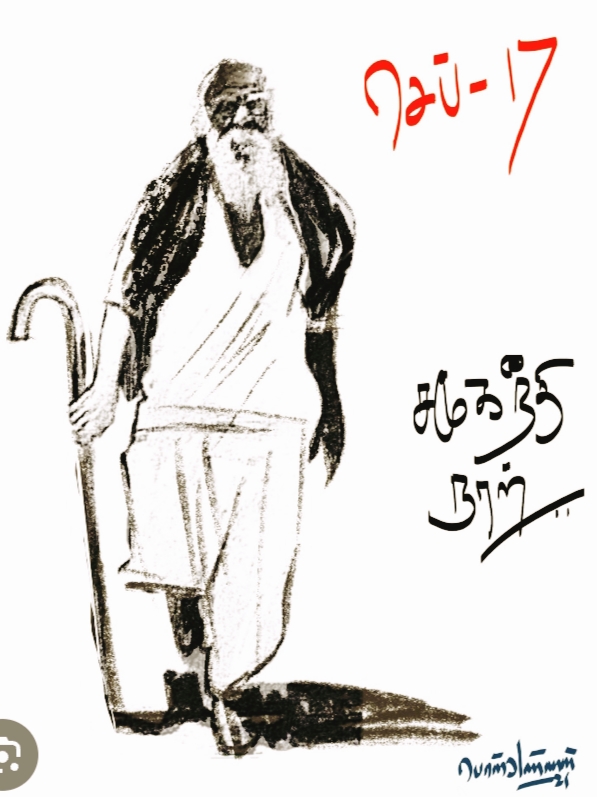
An Erode Venkatappa Ramasamy a.k.a Thandhai Periyar, was born in Erode, then a part of Coimbatore district of the Madras Presidency.
He was an Indian social activist and politician who started the Self-respect movement in 1926.
He was the founder of the Dravida Kazhagam (the Dravida Federation) and was known as the father of the Dravidian movement.
He rebelled against Brahmin dominance, gender and caste inequality in Tamilnadu.
EVeRa (as he’s known to many) promoted the principles of rationalism, self-respect, women’s rights and eradication of caste.
He opposed the exploitation and marginalization of the Dravidian people of South India and the imposition of what he considered Indo-Aryan domination.
The state of Tamilnadu celebrates his birthday on 17th September every year as Social Justice Day.
On 24 December 1973, Thandhai Periyar (the Father and the Elder for many) died at the age of 94.
But his ideals still stay fresh in the minds of people of Tamilnadu today.
He’s the one, I dare say, the most confident person I know.
India is home to many superstitious beliefs. And the beliefs have been passed through generations.
People often visit temples for a pass in an examination, a job in the government and to find a perfect match for a hand in marriage.
And the god(s) don’t disappoint us. He will bless the newly married with children and give the elderly a cure for Rheumatoid Arthritis.
We allow numerology a big say. We add alphabets liberally in names and call our children ‘Praggyaananndhaa’ and ‘Nitthiyaananndhaa’. All in the name of bringing luck!
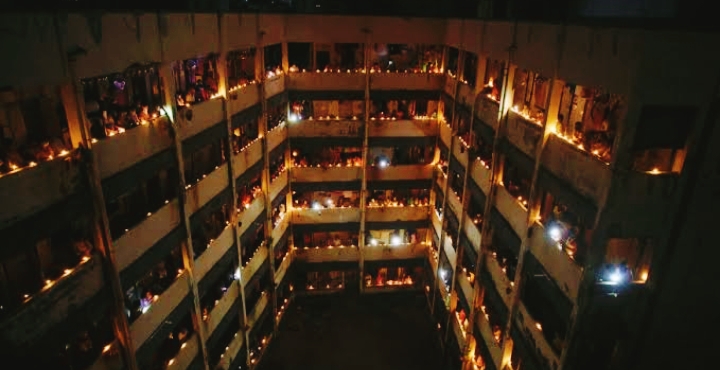
We bang utensils, light lamps and sing prayers to ward off a killer epidemic as deadly as COVID-19.
Many in Mumbai took a day off from work when word spread in 1995 that one of our Hindu gods drank milk. I carried a can of milk and stood in a mile-long queue.
As COVID-19 was sweeping the country, a baba announced that he had found medicine to cure corona. The ministers and the officials jumped with joy. They called the PRESS to announce the new discovery. All in a day.
Tying threads, wearing an amulet, rings on all fingers, sporting a beard and consulting an astrologer for as noble a mission as winning in cricket are part of one’s growing up here.
We don’t visit a hairdresser on Tuesdays, nor do we eat during the Lunar Eclipse, sorry!
Jet-fighters, Rafael, from France, were put to a tough test as officials placed lemons under the tires of the flying-machine and rolled.
No menstruating girls can enter inside the temples as our ancestors believed the act would bring evil-spells.
And we believe man goes through seven births in life, before his soul gets fully liberated. You don’t live just once in this part of the Earth.

 "சென்றிடுவீர் எட்டுத் திக்கும்"