Do you remember life before the internet?

"சென்றிடுவீர் எட்டுத் திக்கும்"
World is a Global Village.
Do you remember life before the internet?
What would your life be like without music?
No music, no good neighborhood.
You’re playing Rihanna so loud. This is a residential society and we are too old. Keep the volume down for god’s sake!
No music, no Indian staff could sit at odd hours answering queries in ‘outsourcing’ call-center companies. Music can keep the callers ‘on hold’ for half a day.
There’s a popular saying in India. “The trumpeting announces the arrival of an elephant”.
No music, no ice cream vendor.
No music, no freeway driving.
No music, no movies.
No music, no cows will produce milk.
No music, no weddings in heaven.
No music, no political campaigns.
No music, no religious processions.
“Pizza for me at lunchtime!”. That’s ‘music to my ears!’

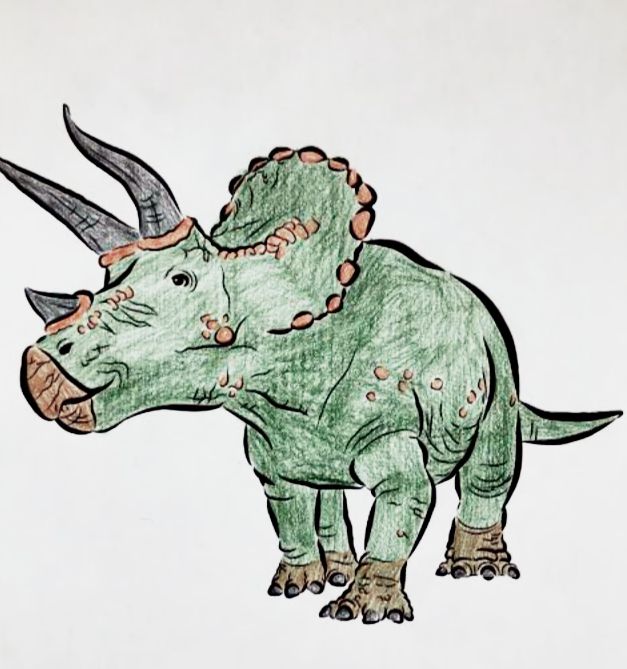
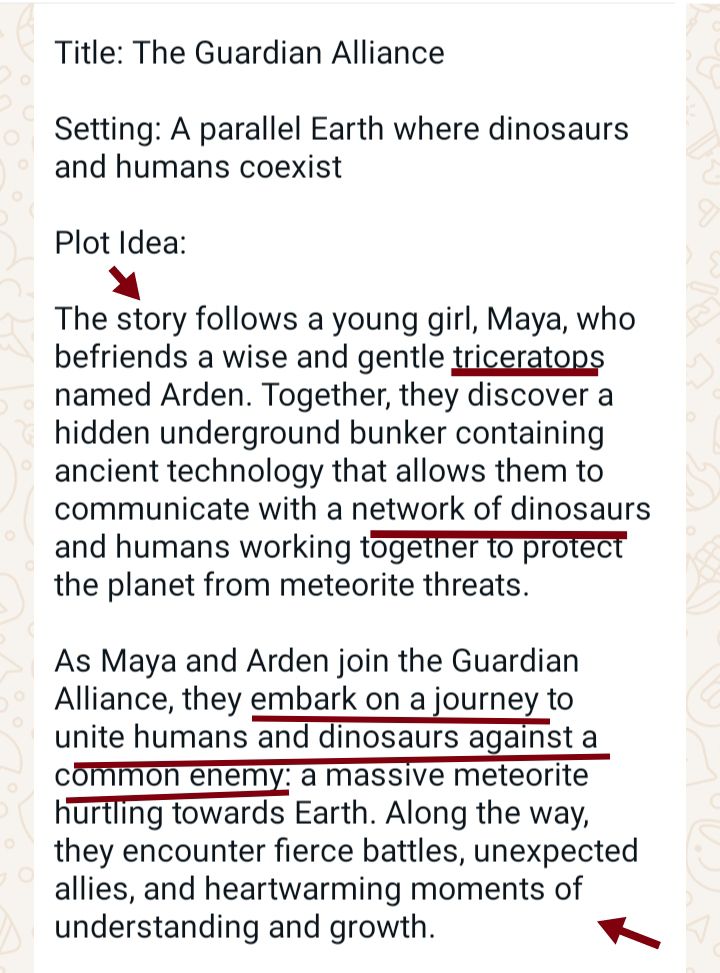
If you could bring back one dinosaur, which one would it be?

What makes you laugh?
When we were young, we imagined animals were ferocious. And they killed other animals for food.
But when we watched the cartoon characters such as Tom and Jerry on Disney, we were so humbled.
Alex, the lion, from the Madagascar series’ Escape to Africa movie, was a captive, pals with other animals, dancing and entertaining. Hilarious!
The King of the Jungle was shown a laughingstock as Alex stood a complete joker in the movie with a fruit-hat.
That just makes one laugh.
The same is the case with people we see every day in our life.
We laugh when big people cry at the doctor’s clinics. We laughed when we saw George Galloway, the MP from Bethnal Green dressed as a cat crawling on all fours at the Celebrity Big Brother show in 2006.
Have a personal story to tell.
I used to coach my 8-year-old cousin Sindhu. I had just finished college and my parents told me to teach her civics, history and science.
She had many friends, and they treated me with respect. I felt I was like a professor emeritus.
The girls often played with a skipping rope.
One day, Sindhu asked me during break if I could beat one of her friends, Akila, in a skipping game. Her friends said she was a sport, and she held the record for most jumps.
I said, oh yes. Why not? Throw the rope. We gathered in the driveway in front of her house.
Akila first started. By the time I got into a pair of track pants, she had already finished 50. She was seriously an athlete.
She gave me the rope after finishing 70. At a stretch, without a break. I was really worried. The other girls clapped. It’s my turn now.
My uncle, aunt and the maid have all gathered now to see the challenge. Loads of audience, waiting. Interesting!
I picked up the rope and started jumping. I quickly counted 20 and was just racing. I thought it was so easy.
When I reached 35, I felt something wasn’t alright. My stomach was giving me some discomfort.
Oh! God, no! Not now!
By the time I reached 40, I ripped one out so loud. Thrrrrrrrrrrrreppp!
A fart in the middle of a sport wasn’t so nice. The girls giggled.
48, 49, 50 and this time it was long. Frrrrt… Frrrrrrrrrt!
I could hear Sindhu, Akila and friends bursting out into a roaring laugh.
I didn’t stop. I couldn’t. My pride was at stake. I kept jumping.
The fart now had got worse. It sounded wet. So serious.
57, 58, 59. I saw my uncle, aunt and the maid getting up and running inside the house laughing out loud. The place had suddenly become a circus.
I couldn’t continue beyond 63 and gave up.
Fart played a spoil-sport. I couldn’t help but join in their laughter.
I laughed, they laughed, and did you have a laugh?
Laughter, ultimately, was the winner.
Salt Lake City, Utah, November 24, 2009.
News cameras broadcast live a rescue mission they never imagined they would ever do in life.
A 26-year-old father of two trapped inside a cave, called Nutty Putty. Upside down, about 150-feet deep.
It was a 27-hour ordeal and 137 volunteers worked through the day and night to rescue the poor man, an experienced caveman himself.
He lost consciousness and died of cardiac arrest. RIP!
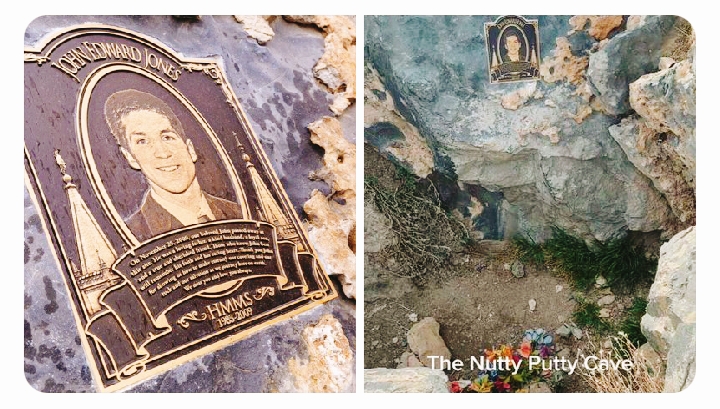
John Edward Jones died leaving behind his wife Emily, a young daughter and a baby boy on the way (he’s named John).
Despite efforts, his body couldn’t be retrieved. The cave is now a memorial to Jones. So sad.
What happened? Read on.
Discovered in 1960, Nutty Putty Cave was a local favorite, attracting 5,000 visitors a year.
The tunnel, measuring 10 by 18 inches (25 by 46 cm), is 150 feet deep. The tight squeezes inside the cave are called “The Helmet Eater,” “The Scout Eater” and “The Birth Canal.”
From 1999 to 2004, six people were rescued stuck in those narrow passages.
The cave was limestone and the walls were strangely viscous clay. Nothing holds on as the clay will change from a solid to an elastic fluid when pressure is applied.
Jones died a sad death as the pulley system employed didn’t help. They came off the wall easily, injuring the rescue crew themselves.
Records say the authorities closed the cave in 2006, fearing safety concerns. But, after an agreement with the local rescue agencies, the management decided to reopen it for visitors in 2009.
They set up an online reservation system by which they allowed only one set of people at a time, and they monitored the visitors.
The cave was shut at night.
Richard Downey, was a treasurer and historian, and he led some of the Boy Scout trips into Nutty Putty for decades.
He says a lot of people going to Nutty Putty were first-timers, or they were on a date with their girlfriends.
They put themselves in situations that they probably wouldn’t have if they had just stopped and thought about it for a minute, he says.
That’s when Jones decided to visit the ill-fated cave with brother Josh and 11 others.
Who thought a happy occasion for a family would end in tragedy?
Visitors to Nutty Putty cave today will only find a plaque dedicated to Jones.
PS: as a tribute to the tragic death of Jones a movie by the name The Last Descent was made in 2016.
Source: https://science.howstuffworks.com/environmental/earth/geology/nutty-putty-cave.htm
What movies or TV series have you watched more than 5 times?
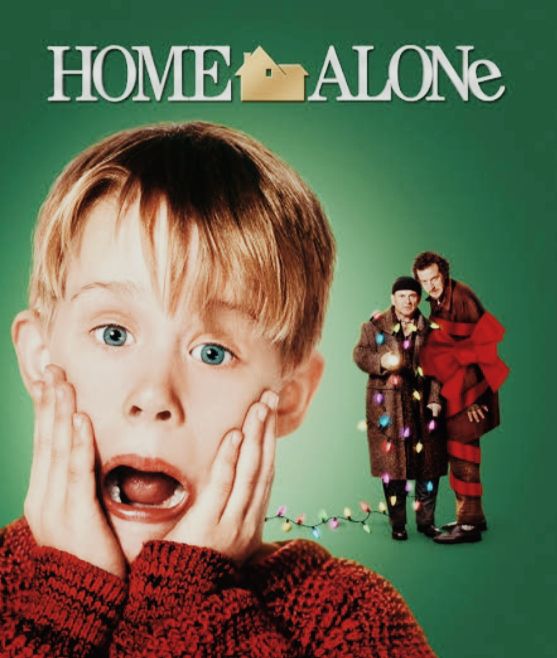
Madagascar – Escape to Africa, Home Alone, Pink Panther, Speed and Rush Hour.

What experiences in life helped you grow the most?
There are plenty I can list out, but I owe it largely to the family I was born in.
My dad, mom, two brothers and a sister gave me a lot to learn. With our relatives living close by, we were a huge home-study.
(My brother-in-law, sisters-in-law and kids soon joined us in our studies and made our home almost a home-run university now).
We never missed an occasion to meet up. From celebrating the birth of babies to attending weddings, we were an entertainment ourselves. We traveled a lot to have a laugh.
I have got a lot of friends. We studied and played a lot of time together. Cricket was our favorite game.
My dad was an engineer and I have always looked to him for guidance. He never failed us.
He taught us good values and helped me get a good education in India. I am so proud.
Carrying a cuppa in hand and reading news so early in the morning was how we started the day in the 80s.
The Hindu was our family newspaper. With the Oxford English Dictionary in one hand and the newspaper in the other, our breakfast couldn’t have been any richer, each day of the week.
Dad surprised us one day by bringing home a television. It was a B&W TV.
We were just left wondering, as there were not too many television shows, let alone television stations. I listened to the cricket commentary only on the radio when India won the World Cup, in 1983.
The box therefore remained mostly shut at home. So sad.
On the advice of colleagues in my dad’s office, we put up a tall Burj-Khalifa-dipole antenna (about 18ft tall) on the terrace of our home.
All that for a one-hour weekly show called ‘Road to Wembley’, beamed from Sri Lanka. We lived closer to Sri Lanka than India when it came to watching shows on TV.
The show was a Friday special, capsuling the English Premier League football matches. It was a rage those days.
If the weather permitting, we (people in the South) were able to watch the show thanks to the tall new aluminum Burj-Khalifa on the terrace.
Evenings on Fridays soon became a ritual. We took showers, wore new clothes, visited places of worship, canceled the day’s appointments (if any) and got ready just in time for the transmission from Sri Lanka to start.
Half our family were sent up to the terrace to stand guard, roll the antenna, fine tune and try tapping whatever signal was available in the transmission, just in case.
Pat, came the reply soon when Delhi Doordarshan set up a station closer to our homes and started transmitting a one-hour UGC (University Grants Commission) educational program on TV. Seven days a week.
But the show sadly ran to an empty audience. Nothing was as captivating as ‘Road to Wembley’, by Rupavahini.
Came the 90s, the landscape in the sky changed, forever. Star TV opened up shops in India and that revolutionized watching television in Indian homes. Good god!
I’m becoming a student of mass communication, choosing a career later on as a television journalist and now a consultant in the media was largely because of my dad and the box he bought in the 80s.
Call it the idiot-box (sorry for the language), but it gave me a career for a living.
As the person I’m today, I owe a lot to my dad. And as a journalist I’ve become, I owe a lot to the box I grew up with.
Now, I miss them both.
 "சென்றிடுவீர் எட்டுத் திக்கும்"