What’s the oldest things you’re wearing today?

"சென்றிடுவீர் எட்டுத் திக்கும்"
World is a Global Village.
What’s the oldest things you’re wearing today?
What brings you peace?
Having a clear head when you wake up, no distaste in the tongue, seeing a clean and white jet of water when you pass the urine and hitting the table for lunch at one in the afternoon every day is ‘peace’ for me.

What strategies do you use to maintain your health and well-being?

What’s the one luxury you can’t live without?
Take a highball glass. Add sugar, mint leaves and a splash of club soda.
Smash and mix them enough so that the flavour of the mint is released.
Cut a lime and squeeze both the halves into the mix. Drop one squeezed half into the glass for the luxury.
Add rum (white is preferable) and stir well.
Fill the glass with ice cubes and top with club soda.
Garnish with a mint sprig. Enjoy.
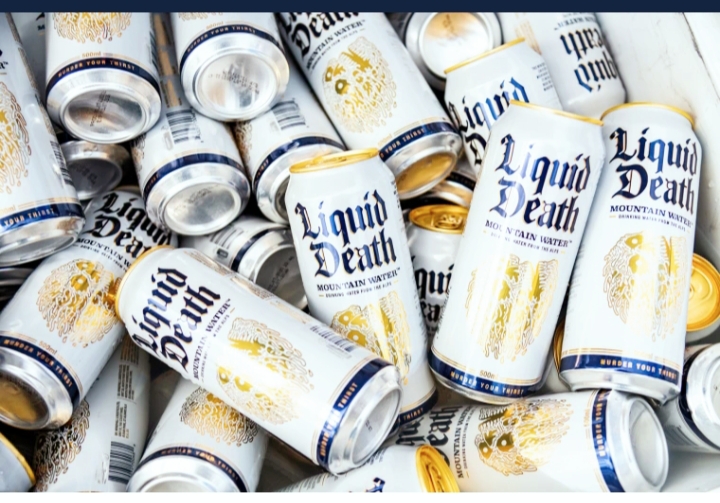
“Liquid Death” is just water in a can, screams the NBC Business News headline.
The new water can is now a rage in the US and in the UK since its creation in 2017. The brand is now valued at $1.4 billion (about 160 crores in Indian rupees).
The news release says the brand Liquid Death had seen “triple-digit” growth for the third consecutive year, becoming the fastest-growing water and iced tea brand, citing SPINS, a market research group.
Liquid Death took off in part because it was a subversion of all the tropes of bottled water marketing that we’re familiar with, according to founder and CEO Mike Cessario.
The name “Liquid Death” refers to the idea of “murdering your thirst,” as well as “death to plastic,” he says.
(Reminds fans in India of the launch of Coke brand Thums Up, with a tagline reading, ‘Taste the Thunder’, doesn’t it?)
The good news is Liquid Death beverages are packaged in an aluminium can and are recyclable.
The brand now has a commanding fan following on social media, with 5 million on TikTok and 2.9 million on Instagram. And the number is growing.
“The Liquid Death can, to be blunt, looks cool,” says Brad Avery, senior reporter for industry newsgroup BevNET, told NBC News in an email.
By putting non-alcoholic beverages in a package that looks like a beer can, he said, it creates a psychological effect of making it easier for someone more image-conscious to consume.
One inspiration for Liquid Death came when I learned that some musicians who preferred to drink water onstage were pouring it into energy-drink cans for fear of embarrassment, as well as sponsorship requirements, says Cessario, the CEO and founder.
“We first invested in Liquid Death because we believed their brand and community was a great fit for the world of live music,” Live Nation CEO Michael Rapino said in a statement to NBC.
Liquid Death’s appeal means it is poised to take market share from both the water market, the beer and the newly growing non-alcoholic drink market, said Dan Buckstaff, chief marketing officer of SPINS, the market research group.
‘Can vs Plastic’ is what hit that sweet spot, Buckstaff said.
A healthy beverage for all on party occasions is how the brand wins hearts, says Cessario.
Three cheers to a can of ‘Liquid Death’.
Mr. Shah is a 61-year-old retired language professor. He lived in our building with his family for a long time.
Mr. Shah has a wife, a homemaker, and a school-going daughter. His two sons were away. The elder was working in the UAE and the younger was studying in Delhi. The Shahs were a happy family.
The year was 2017.
Mr. Shah, his wife and daughter were at home watching TV when I called at his house. I was on my routine weekly visit to see the residents. I was an office-bearer at our RWS (Residents Welfare Society) and I did a lot of volunteering.
Mr. Shah was a good conversationalist. People loved having a chat with him. We usually spoke about issues concerning our society. His input had always been considered valuable by the residents.
On the day I met him, we were having a nice conversation. As we went on, I found suddenly he was going off the subject frequently and was struggling for words. He spoke with a noticeable stutter in his speech. I could see he was sweating. I panicked.
When alerted, Mrs. Shah, came running. She had a good look at him and said he would be alright if he took a rest.
Back in my home, my mind was somehow fixated on what I had just witnessed at Mr. Shah’s house. Nothing was alright with Mr. Shah, I thought.
He reminded me of what we had seen in our own family years ago. My dad died of a stroke.
I rushed to his house again. I told his wife that we should take him to the hospital for a quick check on his health.
I saw Mr. Shah was resting in bed. He was bathed in sweat. We didn’t wait for an ambulance. I took them in my car to the hospital.
The duty doctor, after checking the pulse and the conditions shown on his body, said the professor had suffered a stroke.
He further told us to rush him to Malar Fortis at once.
God! That sounded so serious. Mrs. Shah had welled up in her eyes.
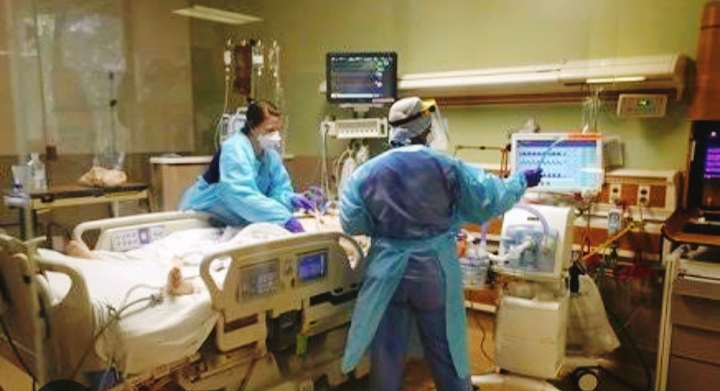
We took an ambulance and rushed to Malar Fortis. Dr. Nair, the General Physician, was on duty. He took Mr. Shah into the ICU, asking us to wait.
We waited (patiently) outside. God, he should be alright.
Dr. Nair came out, took Mrs. Shah aside and asked some personal questions pertaining to Shah’s health.
She was worried, but with a sobbing note in her voice she answered him. Her phone was ringing as her family kept dialing to find out how their father was doing.
She was stuck when Nair asked what exactly the time Mr. Shah had suffered stutter in his speech.
Tense situation all around as staff nurses at the ICU waited for Mrs. Shah to answer.
No answer.
Dr. Nair said it was important to know the exact time, as the patient was carrying a blood-clot in the vessels.
The clot should be killed with a jab before it reaches his brain. So much so that the patient could be brought out of danger. Tell us the time, as calculating how much it traveled would help us spot where the clot was traveling.
Mrs. Shah was in tears, sobbing. She looked at me.
I raked my brain. I vaguely recollected someone was calling me on my phone when I met Shahs. Gotcha!
I took my phone out and ran to Nair. Pulled open the call-history and told him: Sir, the time was 17:15. Roughly about that time, I saw Mr. Shah was struggling.
Brilliant!, said Dr. Nair. Thank God!
Dr. Nair quickly wrote a prescription. Handed it to me, ordering “get the jab immediately”.
At the pharmacy (attached to Malar Fortis) I jumped a long queue. Barged in. Told everyone to excuse us, as we were in an emergency. Everyone obliged. I thanked them.
The pharmacist gave me the jab and handed me a bill. What! A jab costing ₹34K! Where on Earth would I find the money?
I didn’t have enough and neither did Mrs Shah have any. What to do now?
She looked inside her bag and checked, but not so much. Use my credit card? Yes. I paid and rushed to Nair.
The doctor took the jab and disappeared inside the ICU. Surreal atmosphere at Malar Fortis.
Mrs. Shah looked at the giant clock kept in the lobby of the hospital and prayed.
About an hour was gone. The doctor came out and told us the patient was doing alright.
Thank god!
We were so thankful to the medical fraternity that our professor was back kicking and alive.
Mrs. Shah was happy dialing everyone to say the good news. Her sons and daughter were happy. They thanked everyone. I could hear her sons and daughter crying and sobbing while thanking me on the phone. I said thank the doctors and thank the almighty.
Back at home, our society called for a quick meeting to thank me for the timely help I extended to save professor Mr. Shah.
Celebration and congratulatory messages started pouring in. On the phone and on my WhatsApp. I was gobsmacked.
A joke that is doing rounds now in our society is; whenever you hear someone is in need of help or in an emergency, you should dial our in-house doctor, a kinda DIY. Period.
The whole of our street now knows my contact.
Proof, a DIY (Do it Yourself) act can take you really far.
Write about your approach to budgeting.
Budgeting for me revolves mostly around how to cut costs.
I usually place orders through Swiggy, a food delivery chain in India. The delivery most of the time takes time.
If I find the delivery is going to take more than 25 minutes and the restaurant I choose is located close by, I will cancel placing the order and go myself to pick it up. That helps save money on costs.
I ride to work by scooter, as a two-wheeler is easy to drive through busy traffic and a huge saving on gas.
I drive only during weekends. Less traffic, faster roads.
I’ve recently decided to furnish my kitchen with a state-of-art chimney as smoke stays in and that cause embarrassment when guests visit my home.
I called a couple of agencies and asked how much that would cost me. Many said quotes that sounded too unrealistic. The budget ran into two lakh (₹225K) rupees.
I quickly hired an electrician, took him to a store close by, bought a wall-mounted fan costing about ₹1400 and asked him to fix it in the kitchen.
It’s a breeze. Fan on oscillation. No smoke. Positioned in such a vantage place, the flame on the stove is not disturbed at all.
Saving costs, therefore, is budgeting for me.
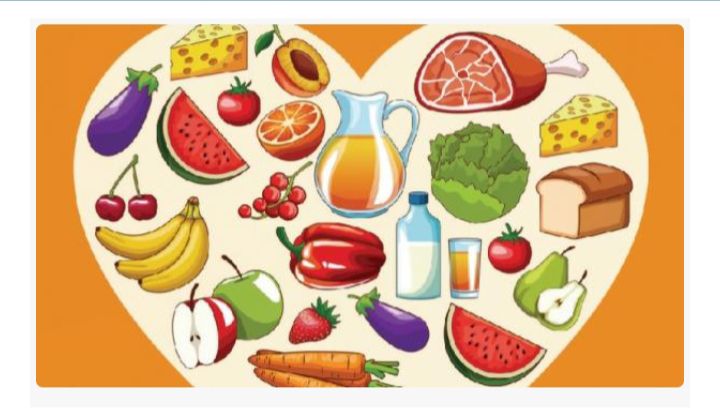
we’re needlessly drinking and peeing 20 million litres of water that we have to supply. A research you can’t give a miss.
https://www.bbc.com/news/uk-scotland-north-east-orkney-shetland-63755475
Happiness rests on building a good relationship. With friends, family and neighbours.
 "சென்றிடுவீர் எட்டுத் திக்கும்"