What’s the trait you value most about yourself?
"சென்றிடுவீர் எட்டுத் திக்கும்"
World is a Global Village.
What’s the trait you value most about yourself?
Yes, the cat called Oscar predicted the death of over 50 patients in a nursing home located in the USA.
The nursing home cares for people with dementia.
Staff at the Steere House Nursing and Rehabilitation Center in Providence, Rhode Island didn’t believe it till about 20 patients died. All the dead were visited by Oscar during their final hours.
Oscar knew exactly when the life of a patient was going to end.
Adapted at the age of six months, Oscar was raised as a therapy cat by the nursing home. Though the cat was found aloof, not mixing with others, he provided comfort and companionship when people needed him most.
Dr. David Dosa, who broke the news of Oscar’s abilities in a paper in the New England Journal of Medicine in 2007, said the cat seemed to understand when patients were about to die. Perhaps through sniffing some unique whiff of death – the chemicals released by dying cells.
CBS News consulted several animal specialists who had corroborated the theory that cats could smell those chemicals and predict.
Dr. Dosa, who was an expert in geriatric care, released a book titled “Making Rounds With Oscar: The Extraordinary Gift of an Ordinary Cat”.
He recounted one instance when staff at the nursing home were convinced that one patient was going to die, but Oscar wasn’t seen near that patient.
The cat chose instead to be on the bed of another patient who was just about doing fine.
Much to their shock, the person Oscar sat with had died first. That just proved Oscar could predict the death of a patient pretty accurately.
But some have argued that Oscar was all about a case of confirmation bias.
People, according to the bias theory, tend to subscribe to an earlier belief which sheds a positive light. They would reject all that goes against their thoughts or expectations.
Oscar sadly died in 2022. RIP!
Mr. Shah is a 61-year-old retired language professor. He lived in our building with his family for a long time.
Mr. Shah has a wife, a homemaker, and a school-going daughter. His two sons were away. The elder was working in the UAE and the younger was studying in Delhi. The Shahs were a happy family.
The year was 2017.
Mr. Shah, his wife and daughter were at home watching TV when I called at his house. I was on my routine weekly visit to see the residents. I was an office-bearer at our RWS (Residents Welfare Society) and I did a lot of volunteering.
Mr. Shah was a good conversationalist. People loved having a chat with him. We usually spoke about issues concerning our society. His input had always been considered valuable by the residents.
On the day I met him, we were having a nice conversation. As we went on, I found suddenly he was going off the subject frequently and was struggling for words. He spoke with a noticeable stutter in his speech. I could see he was sweating. I panicked.
When alerted, Mrs. Shah, came running. She had a good look at him and said he would be alright if he took a rest.
Back in my home, my mind was somehow fixated on what I had just witnessed at Mr. Shah’s house. Nothing was alright with Mr. Shah, I thought.
He reminded me of what we had seen in our own family years ago. My dad died of a stroke.
I rushed to his house again. I told his wife that we should take him to the hospital for a quick check on his health.
I saw Mr. Shah was resting in bed. He was bathed in sweat. We didn’t wait for an ambulance. I took them in my car to the hospital.
The duty doctor, after checking the pulse and the conditions shown on his body, said the professor had suffered a stroke.
He further told us to rush him to Malar Fortis at once.
God! That sounded so serious. Mrs. Shah had welled up in her eyes.
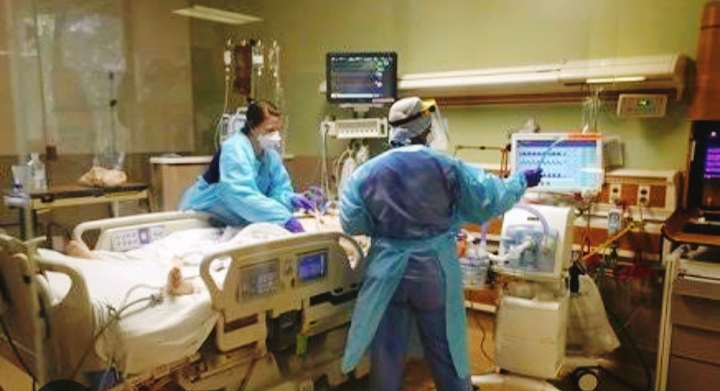
We took an ambulance and rushed to Malar Fortis. Dr. Nair, the General Physician, was on duty. He took Mr. Shah into the ICU, asking us to wait.
We waited (patiently) outside. God, he should be alright.
Dr. Nair came out, took Mrs. Shah aside and asked some personal questions pertaining to Shah’s health.
She was worried, but with a sobbing note in her voice she answered him. Her phone was ringing as her family kept dialing to find out how their father was doing.
She was stuck when Nair asked what exactly the time Mr. Shah had suffered stutter in his speech.
Tense situation all around as staff nurses at the ICU waited for Mrs. Shah to answer.
No answer.
Dr. Nair said it was important to know the exact time, as the patient was carrying a blood-clot in the vessels.
The clot should be killed with a jab before it reaches his brain. So much so that the patient could be brought out of danger. Tell us the time, as calculating how much it traveled would help us spot where the clot was traveling.
Mrs. Shah was in tears, sobbing. She looked at me.
I raked my brain. I vaguely recollected someone was calling me on my phone when I met Shahs. Gotcha!
I took my phone out and ran to Nair. Pulled open the call-history and told him: Sir, the time was 17:15. Roughly about that time, I saw Mr. Shah was struggling.
Brilliant!, said Dr. Nair. Thank God!
Dr. Nair quickly wrote a prescription. Handed it to me, ordering “get the jab immediately”.
At the pharmacy (attached to Malar Fortis) I jumped a long queue. Barged in. Told everyone to excuse us, as we were in an emergency. Everyone obliged. I thanked them.
The pharmacist gave me the jab and handed me a bill. What! A jab costing ₹34K! Where on Earth would I find the money?
I didn’t have enough and neither did Mrs Shah have any. What to do now?
She looked inside her bag and checked, but not so much. Use my credit card? Yes. I paid and rushed to Nair.
The doctor took the jab and disappeared inside the ICU. Surreal atmosphere at Malar Fortis.
Mrs. Shah looked at the giant clock kept in the lobby of the hospital and prayed.
About an hour was gone. The doctor came out and told us the patient was doing alright.
Thank god!
We were so thankful to the medical fraternity that our professor was back kicking and alive.
Mrs. Shah was happy dialing everyone to say the good news. Her sons and daughter were happy. They thanked everyone. I could hear her sons and daughter crying and sobbing while thanking me on the phone. I said thank the doctors and thank the almighty.
Back at home, our society called for a quick meeting to thank me for the timely help I extended to save professor Mr. Shah.
Celebration and congratulatory messages started pouring in. On the phone and on my WhatsApp. I was gobsmacked.
A joke that is doing rounds now in our society is; whenever you hear someone is in need of help or in an emergency, you should dial our in-house doctor, a kinda DIY. Period.
The whole of our street now knows my contact.
Proof, a DIY (Do it Yourself) act can take you really far.
Have you ever unintentionally broken the law?
Yes.
Not just once but many times, I’m afraid.
While waiting to cross the road in busy traffic, I can see how desperate the school children wait to get across so that they reach school on time.
That’s when I think I shall quickly hop in, stick my hand out and stop vehicles on either side of the road. So much so that mom and kids get across to the other side.
Call it evil intentions?
This is India and nobody here cares to halt at the lights and allow pedestrians to use the zebra-crossing. No cops manning this junctions. Poor kids.
I don’t know if any law allows me to do that, but I do it quite often.
Call it unintentional. But it’s a huge help with all good intentions.
Kids thank me for the novel gesture and that makes my day. All days in a week.
 "சென்றிடுவீர் எட்டுத் திக்கும்"