February 11, 2020.
Girls studying at Krantiguru Shyamji Krishna Verma Kutch University based in Gujarat, India were put to a rude shock.
They were taken to the washroom by staff and forced to remove their undergarments to prove they were not menstruating.
What’s the crime? They were seen sitting in the canteen, chatting and eating food.
The university, as the news said, has put in place a strict rule that menstruating girls should not enter the cafeteria or the canteen to eat food. They should desist from joining others.
No sooner had this trauma for girls at the university ended than the guru, Mr. Krushnaswarup Dasji attached to Nar-Narayan Devgadi of Swami Narayan Sect said menstruating women in India should not enter the kitchen and cook food.
The reason, as he quoted from ancient Shastras, was that menstruation is a penance decreed by god. If they continue to cook food while menstruating, they will be cursed to be born as dogs in their next life.
The guru didn’t stop with just that.
If their husbands choose to eat the food, they will be reborn as bullocks, he said.
The nation was shocked. Many were outraged. Women in India have protested.
The law quickly swung into action.
The police arrested the principal, the hostel rector and the peon of Shree Sahajanand Girls Institute (SSGI) for the shameful incident of stripping the girls.
8th of March today is the world’s women’s day and let’s wish women a happy, free and a fulfilled life.
While doing so, let me share a snippet of a story that appeared in the Washington Post about two years ago. Penned by the author Amruta Byarnal, the story talked about how a handful of women in Delhi reacted to Guru Dasji’s disparaging statement.
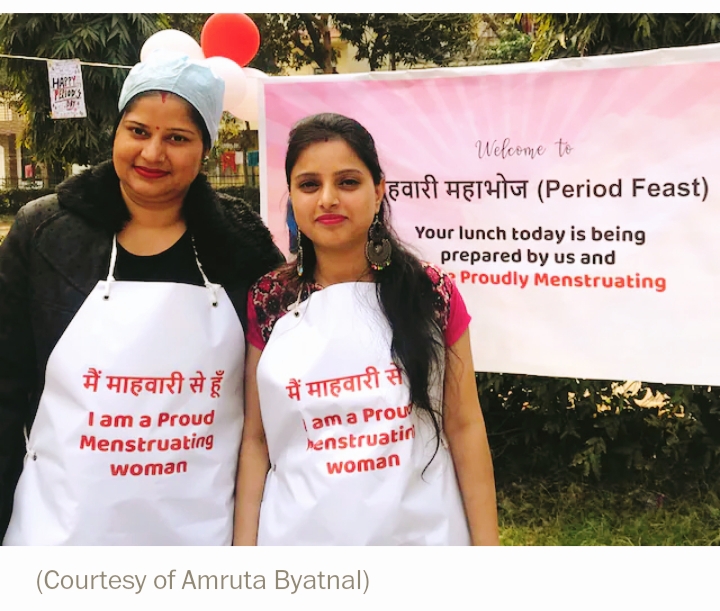
The story said menstruating women gathered and conducted a ‘Period Feast’. Women were called, asked to cook food and serve the guests.
Many, including men, attended the feast. The event was huge and people partied. Women wore T-shirts that boldly said they were menstruating.
Banners and balloons carried messages that said menstruation was natural, and the biological process was nothing demeaning of women.
“We felt it was important to respond to damaging statements about women because we didn’t want to give substance to myths and taboos any further,” said Rikita Narula of NGO Sachhi Saheli, which funded the feast.
The government data says there are 355 million menstruating women and girls in India, and only 42 percent have access to sanitary napkins.
According to a 2014 USAID-backed report, nearly 23 million girls drop out of school annually due to lack of proper menstrual hygiene management facilities.
Men like Guru Dasji have only helped damage the cause of women in India and the patriarchy is sadly the main villain.
Events like ‘Period Feast’ send a strong message to the world that women are born equal.
Women are as independent, career-building, equal and free as men. Periods for women should never be an impediment to their progress in society.
Chitransh Saxena, a male guest at the event, was all in praise of the women gathered. He called for putting an end to old customs surrounding women’s hygiene.
He said he was there to support the women’s cause.
Mr. Saxena, the founder of Pad Bank (a Delhi-based NGO) emphasised upon educating boys about women’s menstrual health.
On this day, let’s take a pledge, join hands with people who work for the cause of women round the world and work toward creating a society that’s all embracing and equal.

 "சென்றிடுவீர் எட்டுத் திக்கும்"