What are you good at?

"சென்றிடுவீர் எட்டுத் திக்கும்"
World is a Global Village.
What are you good at?

If there was a biography about you, what would the title be?

Write about a few of your favorite family traditions.
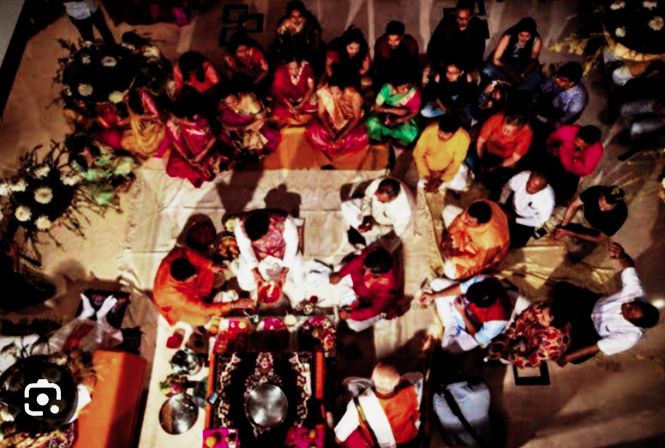
Marriage in a Hindu family is unique.
Boys and girls don’t see each other before marriage. Parents and elders choose the matches. And, elders place hope on astrology for the best match.
Grooms and brides consummate their marriage on the FDFS. It’s called strangely “First Night” though.
Girls mostly are destined to mean jobs at home such as cooking, washing and cleaning.
They are not allowed to mix freely with others when they are on periods.
By middle ages, the couple mostly sleep separate and sex between the elderly is a taboo. They spend a major part of life by sitting in front of TV. They watch anything from soap to sports to stupidity.
Children in India are forced to study professional courses such as engineering and medicine. For reasons that brides bring in a lot of wealth to boys’ homes as dowry in marriage.
At homes in India, girls are married off younger and earlier than boys. The reason is to make them work at mean jobs and be useful to the boys’ family.
A childless marriage is often blamed on the girl. But the boys are considered omnipotent.
When a wife dies at old age, the husband can re-marry but a wife can’t. She is a loner during the marriage and continues to be one even after her husband dies.
Women in traditional Hindu family in India often suffer a “miserable life”.
What makes a teacher great?
Students don’t care how much you know until they know how much you care.
This week, India was in the news for all the wrong reasons. Why?
Let’s not talk about the reason, which is political. Let’s talk about one which is academic.
Yes, the NEET enthusiasts in the country have suffered a jolt when the results for 2024 showed 67 students scored full marks (720/720).
Many students have got marks, which is absolutely improbable. The authority – NTA – who is conducting the exams claim those were grace marks awarded.
Questionable as the case is in court now.
In one centre, eight students were awarded full marks. The centre is in the state of Haryana, India.
Eight scoring full marks is a rare instance and that brings to memory what happened at the University of Chicago back in 1930.
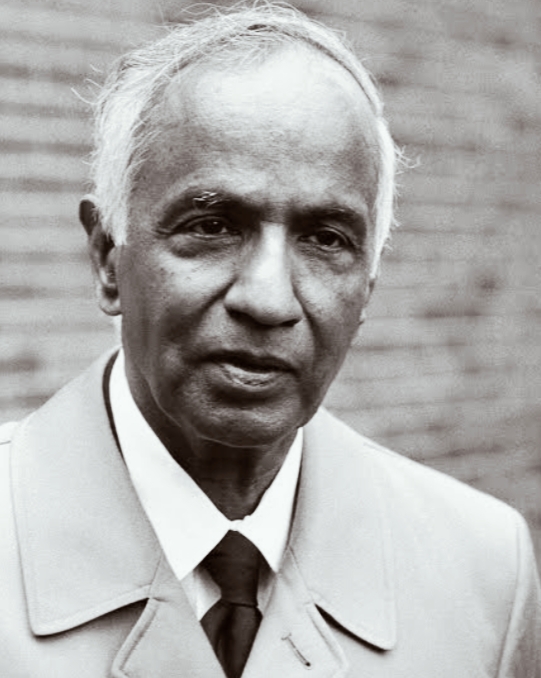
The Nobel laureate Dr. Chandrasekhar – a Tamil and a proud Indian – was a passionate teacher. He was professor of astrophysics.
While he was in the USA, he wanted to teach the subject to aspiring students, but he, unfortunately, had only two students in his class. And the venue was located too far away too. About 100 kilometers he had to travel every day to teach the pair.
He was undeterred though.
For this very reason, the professor was laughed at by his colleagues on the Chicago campus. All advised him to drop the idea. Many ridiculed him for traveling 100KM each day to teach. So embarrassing.
But the professor had seen a greater opportunity in the negativity.
He thought a small class would give him an ample atmosphere for teaching the subject well and spend a good amount of time for discussion, if any. The class went ahead as planned.
As the professor, Dr. Chandrasekhar envisaged the class consisting of T.D. Lee and C.N. Yang went on to win a Nobel each for Physics in 1957.
That’s not the end of the story.
Dr. Chandrasekhar himself got the Nobel Prize in 1983.
Thus, the world witnessed one of the rarest instances in history, where an entire class, including the teacher, has bagged a Nobel.
A proud moment in academic history!
Hope Dr. Chandrasekhar wasn’t the inspiration behind the story of eight NEET students winning big in a single exam centre in Haryana.

What’s something most people don’t understand?
We often see people giving no two hoots about other peoples’ privacy. Nor do they give a damn about respecting others.
As the world is now reduced to a smartphone, we see people glued to social media such as FB, X (formerly Twitter), Instagram and YouTube. The result is reality is out gone for a toss.
I have been to a coaching academy, based in Trichy, Tamilnadu, recently as a mentor. Students I found there were a lot ill-disciplined.
They pay no attention in class. They sleep. No hygiene. Nor do they give respect to the teachers and staff. And the parents always say their wards are right.
Come home to my building in Chennai, Tamilnadu. We have a functioning association under the Residents Welfare Society act. But people don’t pay the maintenance charges on time. They don’t keep the surroundings tidy and clean.
The traffic in India is one of the worst in the world. There’s no such thing here as a bus-lane. No limited hours. Nor do the authorities collect congestion tax like the one we see in the US and in the UK.
You can see people always rushing through traffic and creating confusion. Because they often run to school and office late or miss the time of scheduled meetings.
People are nosy in our neighbourhood. Gossiping is routine. Invasion of privacy is just an everyday affair.
It’s election time in India now. Politicians reap a heavy harvest of people’s innocence. They promise heaven while campaigning and do nothing after grabbing seats in the August houses of Parliament.
Knowing your rights is what people need now. When will they understand?
Who was your most influential teacher? Why?
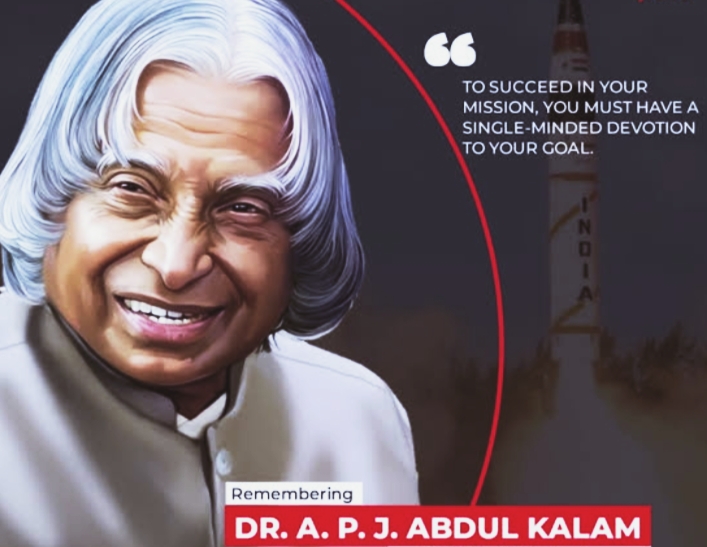
Late Dr. APJ Abdul Kalam, the former president, a scientist, an erudite scholar and an excellent teacher.
He was born into a Muslim family who lived in a remote town called Rameswaram on Pamban Island. It is a popular pilgrimage centre located in the State of Tamil Nadu, South of India.
Dr. Kalam always said he was a teacher first and a president next. Such was his love for teaching. The nation remembers him as a great role model.
He was called the “People’s President” because he asked students in the country to dream of a strong, self-reliant India. And he tasked the teachers with preparing the young towards achieving the goal.
He emphasized the importance of students developing a scientific temper and encouraged them to think independently to find solutions.
Dr. Kalam returned to teaching, writing and public service after he served just one term as president. Humility was his character and personality.
He wrote a book titled India 2020 wherein he put out an action plan that he said would take India towards achieving a developed status by 2020. It’s now 2024 and the nation is achieving the objective thanks to Dr. Kalam’s vision.
In 1997, Kalam received India’s highest civilian honour, the Bharat Ratna, for his contribution to scientific research and modernization of defence technology.
He died while delivering a lecture at the Indian Institute of Management in Shillong on 27 July 2015.
The nation remembers him not just as a scientist, scholar or the former president of India, but as a beloved teacher.
What do you wish you could do more every day?
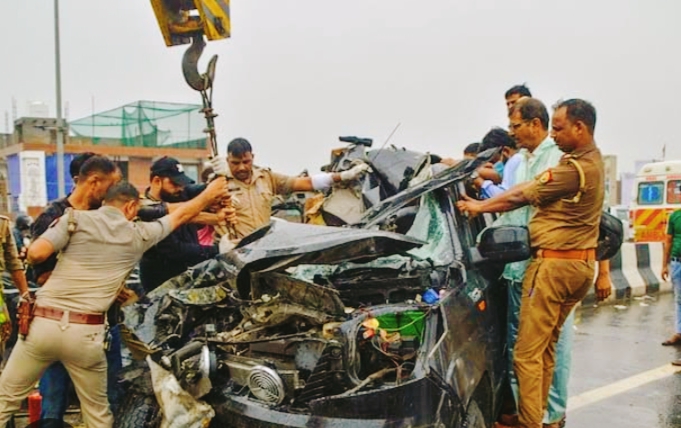
India accounts for the highest number of road accidents in the world.
Seven out of every 10 lives, or 70%, die due to speeding in India.
In an interview last month, Transport Minister Nitin Gadkari said that government intervention would not be enough unless citizens start following traffic rules more seriously.
I wish, therefore, I could do more by stopping citizens, educate them about safe driving and tell them to avoid speeding. And I hope that would help save lives on Indian roads.
I wish I could do it every day.

“Dear god, Krishna ji, please stay with me, please keep my parents happy … please help me crack Neet 2024”.
“God teach me how to work very hard”
Those messages one never misses seeing on the wall of the Radhakrishna temple located at Kota, Rajasthan in India.
Kota in India is home to thousands of coaching centres for engineering and medical entrance examinations.
People call the city now the most stressful, as the place is known for all wrongful reasons. 27 students committed suicide last year and the number is rising.
Three have died this year. The latest being a 19-year-old engineering aspirant. RIP!
2 million students appear each year for just 140,000 seats in medical colleges in India. Over one million people compete for 10,000 seats in top engineering institutions called IITs.
Months ago, I went to a coaching centre located in Trichy, South of India.
Students study 18 hours a day, walking like zombies on the campus. Many of them sleep during class.
Teachers were mostly seen rushing through chapters and completing the job like how train drivers run between stations. Too mechanical, to say the least.
I saw a coach, an MIT, Chrompet (Chennai) alumni and an MD of a popular NEET academy breaking down in the middle of class, cry in front of students and start begging them for attention in the class.
Parents in India pay through nose (₹150,000 a year plus ₹30K for food & accommodation) for their children’s education. They place enormous hope on their wards. They want to see them as doctors or engineers, nothing less.
But there’s a sorry sight to the whole story.
Students can’t cope and they commit suicide. The pressure for them is just too much to bear.
The government is confused. While the authorities sit, discuss and contemplate measures to arrest this disturbing trend, students continue to harm themselves at these killer-centres.
Why do students resort to making such extreme ends?
Mental health issues, academic pressure and social stigma drive students to go to this extreme end – screams the article in Frontline, The Hindu.
35% of recorded suicides occur in the age group of students between 15 and 24 years, says statistics on Wikipedia.
Are students happy at home?
Studies say students who are well integrated with their families and community have a good support system during crises, protecting them against suicide.
Low levels of emotional warmth often drive them to seek a lonely spot.
A high level of parental control, or over-protection, by parents is associated with a three-fold increase in the risk of their ward’s suicidal behaviour.
How to spot them going bonkers early on?
Students nowadays pick up info about harming themselves from platforms such as YouTube and the internet.
A suicide often precedes an attempt. An early identification of what they do when they are alone and timely intervention should help stop them.
This could help in reducing suicide rates in India, experts say.
Intervention as well as a primary prevention strategy could help keep the rate of suicide under check.
Create a positive atmosphere for the children to interact freely with parents, elderly and friends.
Teach the students to cope. Tell them to learn an adaptive mechanism in life.
An awareness campaign should be spread among parents, teachers and healthcare professionals regarding child-rearing practices.
The community should frequently meet up, sit and discuss various social programs, such as child and family-supporting ones.
The community agenda may further include programs that aim at achieving gender and socio-economic equality.
Start now to see the results.
PS: the happiest lot I’ve seen at the NEET campus was the young staff working in the canteen.
They were of a similar age group. But they were more independent, carefree, employed, earning, carrying a phone, riding on bikes, socializing, cheerful and headed home by evening.
 "சென்றிடுவீர் எட்டுத் திக்கும்"