


"சென்றிடுவீர் எட்டுத் திக்கும்"
World is a Global Village.

Describe a risk you took that you do not regret.
Evolution is a brutal process. Only the strongest and the fittest will survive.
Millions of sperm are released into the uterus in a single ejaculation.
Conception is an arduous journey. The woman’s egg might reject the sperm of her chosen partner, says the latest research by a group of researchers at Stockholm University, Manchester University NHS Foundation Trust and The University of Manchester.
The female body considers sperm to be a foreign object and hence her immune system reacts to eliminate them.
And, defying the odds, a lone sperm staying alive in the uterus for up to three days, winning the war, swimming upstream, going on to penetrate the egg and completing fertilization is what we call successful conception.
Being born, therefore, on this Earth must be the toughest and riskiest journey yet, and one should celebrate the moment rather than regret it.
I’ve won the war, a risky venture against a 250 million strong army, and I have no regrets.
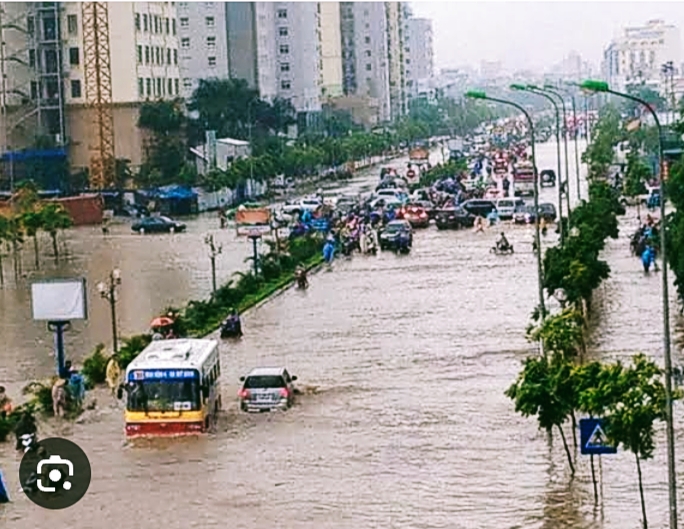
Urbanization comes with a cost. A huge cost, perhaps.
China is presenting a grim picture. How?
Nearly half of China’s major cities are sinking because of water extraction and the increasing weight of rapid expansion, the latest BBC reports say.
Scientists blame the new cause for worry is because China is rapidly expanding.
Some cities in the country are sinking rapidly, with one in six exceeding 10mm a year.
Other major urban centers in Asia, including Osaka and Tokyo in Japan, also face the issue of subsidence.
What does the future hold for people living in urban cities, then?
If this trend continues unchecked, the people, especially those living in the coastal regions, are threatened with flash flooding as the sea level (alarmingly) rises every year.
Shanghai in China has sunk more than 3mm in the past century.
A team of researchers from several Chinese universities observed the period between 2015 and 2022 using data from Sentinel – 1 satellites.
They found 45% of urban areas are subsiding (sinking) by more than 3mm per year.
The scientists say that around 16% of urban land is sinking faster than 10mm a year. They say it’s a rapid descent.
That means a whopping 67 million people are currently living (at risk) on this fast disappearing stretch of land.
What influences the scale of decline?
The soil, the weight of buildings and, to a major extent, the extraction of groundwater water determine the decline.
This pattern is noticeable in several major urban areas around the world now, including Houston, Mexico City and Delhi.
“I think water extraction is, to my mind, probably the dominant reason,” said Prof Robert Nicholls, from the University of East Anglia.
The other major cause of worry is urban transportation systems and uncontrolled mining for minerals and coal.
The researchers say hundreds of millions of people are at the risk of flooding as the land is sinking faster than the sea level rising. The latter because of climate change, as you know.
Gone are the days when people in the 1970s used piped water and were less dependent on bore-wells.
It’s time the authorities sat and enacted a law that makes it illegal to extract water (unscrupulously) from the ground.
Will they do?
Because that might help save the ground fast disappearing under our feet and help save a million people living in the coastal regions.

An Indian food delivery company was in the news recently. For all the wrongful reasons.
They planned to introduce a ‘pure vegetarian fleet’ to supply food to vegetarian customers in India.
The company CEO Deepinder Goyal announced that the ‘Pure Veg Fleet’ will wear green uniform instead of the usual red while delivering.
People in general were outraged when he said they would not deliver food from any restaurants that serve eggs, fish, chicken or any sort of meat.
The social media soon joined in the fray. They were up in arms, calling the new fleet discriminatory.
The issue died only when the CEO of the company apologized and retracted the statement.
Mr. Goyal said on X (formerly Twitter) that his company rider’s physical safety was of paramount importance. He further said the new (mis) adventure might put his customers into trouble with their homeowners.
Sheikh Salauddin, president of the Indian Federation of App-Based Transport Workers union, criticized Goyal’s announcement by saying that he was going to categorize delivery partners on the lines of caste, community and religion.
Well, that asks a bigger question: Is India actually a majority vegetarian nation?
They have a very strange order among them. They eat no flesh, but live with roots and rice and milk. – wrote Ralph Fitch, an English traveller to India in the year 1580.
The ancient Vedas, Dharmashastras, Manusmiriti, Puranas and Thirukural (the famous Tamil couplet) have mentioned more about the benefits of being vegetarian than meat-eating.
But India, as the world knows, has historically, been a meat-eating nation with widespread forests, animals, fish and birds. Archaeological finds from the Harappan civilisation show people consumed meat.
Later, as Jainism and Buddhism spread, vegetarianism became more common. And Hindus have embraced vegetarianism.
Now, a third of India eat vegetarian food. But, strangely, vegetarians among the Hindus mostly belong to the upper-caste.
The controversies don’t end so soon.
The same food delivery company kicked up a row in West Bengal as Muslim delivery agents of the company struck work by refusing to deliver pork items to customers. The Hindu delivery agents soon followed suit. They opposed delivery of beef to customers.
As this is dragging on forever, people in South East Asia and China have shown a liking for a new recipe.
Technology Networks have recently published a news item people might find scary. Caution!
(Trigger Warning: Readers are advised caution as the content might sound offensive to some).
Farmed pythons may offer a sustainable and efficient new form of livestock to boost food security, according to new research from Macquarie University.
Snake meat is white and very high in protein, says Dr Daniel Natusch, who led the study done by two South-East Asian commercial python farms.
Dr. Natusch is an Honorary Research Fellow from the School of Natural Sciences attached to Macquarie University.
The multi-institutional research team included scientists from Macquarie University, the UK’s University of Oxford, the University of Adelaide, Johannesburg’s University of the Witwatersrand and the Vietnamese Academy of Science and Technology in Hanoi.
They found pythons convert feed into weight gain (remarkably) more efficiently compared to conventional livestock such as chickens and cattle.
“Our study suggests python farming complementing existing livestock systems may offer a flexible and efficient response to global food insecurity”, the university concludes.
Though it will take a long time for the Western world (and the palates in India) to culturally adapt to the thought of eating snakes, it’s important to consider an alternative protein source to mitigate global food insecurity.
Have snakes come as saviours to serve the cause? – is the most pertinent question now.
Who is the most confident person you know?
Who’s the most confident person I know?
History has plenty to choose from. But there’s one I should say stands out tall among all.
He was the most revered and is kept dear to the hearts of people in Tamilnadu, India. And he was loved by people around the world alike.
Who’s he?
The year 1543, saw the birth of ‘De revolutionibus orbium coelestium’ (On the Revolutions of the Heavenly Spheres) by Nicolaus Copernicus. The mathematician-astronomer questioned the theory of the geocentric model of Ptolemy, who the Catholic Church considered ‘numero uno’.
While Ptolemy positioned Earth at the centre of the universe, Copernicus rebelled and said that the Sun is at the centre of the universe. He was penalized and asked to recant.
Then Galileo Galilei came in 1564. The Father of Observational Astronomy championed the cause of Copernican heliocentrism.
And he met (as usual) with opposition from the Catholic Church. He didn’t stop though.
The Roman Inquisition called Galileo foul in 1615 and termed him foolish, absurd and heretical.
There’s more.
Then came the Age of Enlightenment, or more precisely, the Age of Reason in Europe in the 17th and 18th centuries. That set the tone for a secular world.
Human happiness, pursuit of knowledge through reason, evidence of the senses, were central to this new reasoning movement.
Followed soon were the ideals such as natural law, liberty, progress, toleration, fraternity, constitutional government, and most importantly, a spark that called for the separation of church and state.
John Locke wrote “cogito, ergo sum” (I think, therefore I am) in 1637.
Issac Newton’s Principia Mathematica in 1687 gave birth to the Scientific Revolution in Western Europe.
Immanuel, the father of ethics, aesthetics, and modern philosophy wrote an essay titled ‘Answering the Question: what’s enlightenment?’
Louis XIV died in 1715. The French Revolution began in 1789. Monarchy died a slow death.
A variety of 19th century movements have set the tone for liberalism, socialism and neoclassicism.
Political revolutions have been the order of the day, and they have begun to question the religious authority in power.
People looked with awe at the works of Francis Beacon, Thomas Hobbes, John Locke, David Hume, Kant, Montesquieu, Jean Jacques Rousseau, Adam Smith and Voltaire.
All set. And then an idea was born in 1879 in the South of India.
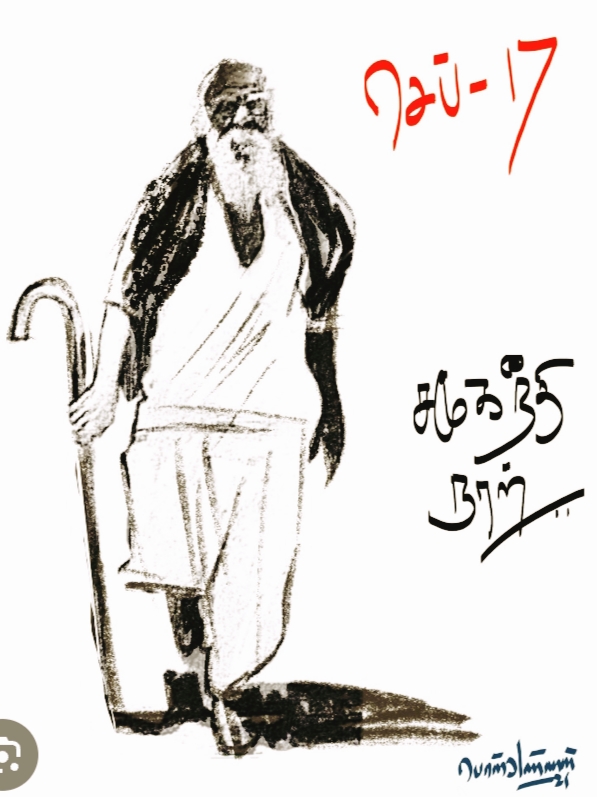
An Erode Venkatappa Ramasamy a.k.a Thandhai Periyar, was born in Erode, then a part of Coimbatore district of the Madras Presidency.
He was an Indian social activist and politician who started the Self-respect movement in 1926.
He was the founder of the Dravida Kazhagam (the Dravida Federation) and was known as the father of the Dravidian movement.
He rebelled against Brahmin dominance, gender and caste inequality in Tamilnadu.
EVeRa (as he’s known to many) promoted the principles of rationalism, self-respect, women’s rights and eradication of caste.
He opposed the exploitation and marginalization of the Dravidian people of South India and the imposition of what he considered Indo-Aryan domination.
The state of Tamilnadu celebrates his birthday on 17th September every year as Social Justice Day.
On 24 December 1973, Thandhai Periyar (the Father and the Elder for many) died at the age of 94.
But his ideals still stay fresh in the minds of people of Tamilnadu today.
He’s the one, I dare say, the most confident person I know.

Do you believe in fate/destiny?
Yes. One should.
Those two words decided how life came into existence on the earth.
Of the 300,000,000 (roughly) sperms ejaculated during coitus, only about 200 actually reach the oviduct. Only a lone lucky fellow out of the 200 does a further climb and dares penetrate the egg. Bravo!
Fate plays a part up to this point. No one has control over embryogenesis.
How the fellow later on grows up to become an Einstein, a Theresa, a Gandhi, a Martin Luther King or an Usain Bolt is all part of destiny. That’s very predictable though.
God made fate. Man made destiny.
How deep is your LOVE for oceans on Earth?
 "சென்றிடுவீர் எட்டுத் திக்கும்"