Where can you reduce clutter in your life?
"சென்றிடுவீர் எட்டுத் திக்கும்"
World is a Global Village.
Where can you reduce clutter in your life?
What’s a topic or issue about which you’ve changed your mind?
Scour the news for an entirely uninteresting story. Consider how it connects to your life. Write about that.

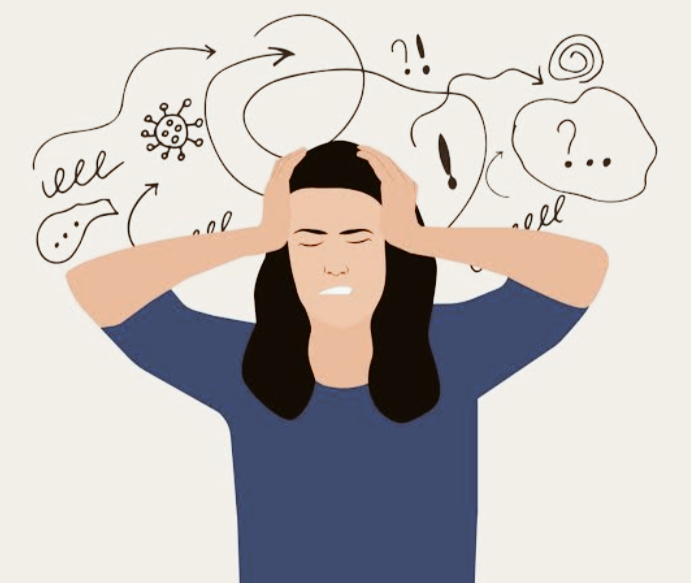
What strategies do you use to cope with negative feelings?
No big strategies. Just plain reading of how our brain works. That will do.
I’ve read on the internet that our body has a natural response to both positive and negative thoughts.
Our body secretes a hormone called dopamine when we read or hear good news. India winning the test series against touring Bazball-England should make us happy. So that’s loads of bright bulbs in the brain. No damage.
But, there’s a villain hormone at the same time. It’s called cortisol. It begins to flood the moment when you know you run to work late. And it doubles up in a deluge when you see the traffic on the road is moving too slow.
So our body basically plays both a good and bad cop. The bad guy is noticeably the dominant of the two. It’s tough calming him down.
There are no quick fixes to kill a bad thought, to say honestly. We should see the situation and act accordingly.
Give an example.
Imagine, the traffic is now cleared. You start cruising along. Suddenly, you hear the sirens and an ambulance appears quickly in the rearview. Flashing and asking the right of way. You know clearly there’s someone in need of an emergency.
How would you react? Give way or keep pressing the pedal?
Giving way should naturally be the best way to react. Because you know you should help save a person in trauma. And the law says to give priority to an ambulance.
The same is the case with all negative thoughts put together. When the thought knocks at the door, do one of the following. Without thinking twice.
Just give in.
Walk away.
Drink a glass of water and relax.
Take a cold shower.
Shut down the phone.
Take the dog out for a walk.
Visit a local store and buy some candy.
Feed the fish.
Visit the beach and watch those waves kissing your feet.
Pay the guy at the balloon stall and pick up the gun. Check how good your aim is.
Give no space for negative thoughts. At all.
Till about time your bad cop ‘cortisol’ runs completely empty. Leave no trace of him.
Life is a battle of wits. Keep calm when you win. Laugh whenever you fail.
Keep the good and give the bad cop the kick. On any day.
Be the winner. Always!

“Dear god, Krishna ji, please stay with me, please keep my parents happy … please help me crack Neet 2024”.
“God teach me how to work very hard”
Those messages one never misses seeing on the wall of the Radhakrishna temple located at Kota, Rajasthan in India.
Kota in India is home to thousands of coaching centres for engineering and medical entrance examinations.
People call the city now the most stressful, as the place is known for all wrongful reasons. 27 students committed suicide last year and the number is rising.
Three have died this year. The latest being a 19-year-old engineering aspirant. RIP!
2 million students appear each year for just 140,000 seats in medical colleges in India. Over one million people compete for 10,000 seats in top engineering institutions called IITs.
Months ago, I went to a coaching centre located in Trichy, South of India.
Students study 18 hours a day, walking like zombies on the campus. Many of them sleep during class.
Teachers were mostly seen rushing through chapters and completing the job like how train drivers run between stations. Too mechanical, to say the least.
I saw a coach, an MIT, Chrompet (Chennai) alumni and an MD of a popular NEET academy breaking down in the middle of class, cry in front of students and start begging them for attention in the class.
Parents in India pay through nose (₹150,000 a year plus ₹30K for food & accommodation) for their children’s education. They place enormous hope on their wards. They want to see them as doctors or engineers, nothing less.
But there’s a sorry sight to the whole story.
Students can’t cope and they commit suicide. The pressure for them is just too much to bear.
The government is confused. While the authorities sit, discuss and contemplate measures to arrest this disturbing trend, students continue to harm themselves at these killer-centres.
Why do students resort to making such extreme ends?
Mental health issues, academic pressure and social stigma drive students to go to this extreme end – screams the article in Frontline, The Hindu.
35% of recorded suicides occur in the age group of students between 15 and 24 years, says statistics on Wikipedia.
Are students happy at home?
Studies say students who are well integrated with their families and community have a good support system during crises, protecting them against suicide.
Low levels of emotional warmth often drive them to seek a lonely spot.
A high level of parental control, or over-protection, by parents is associated with a three-fold increase in the risk of their ward’s suicidal behaviour.
How to spot them going bonkers early on?
Students nowadays pick up info about harming themselves from platforms such as YouTube and the internet.
A suicide often precedes an attempt. An early identification of what they do when they are alone and timely intervention should help stop them.
This could help in reducing suicide rates in India, experts say.
Intervention as well as a primary prevention strategy could help keep the rate of suicide under check.
Create a positive atmosphere for the children to interact freely with parents, elderly and friends.
Teach the students to cope. Tell them to learn an adaptive mechanism in life.
An awareness campaign should be spread among parents, teachers and healthcare professionals regarding child-rearing practices.
The community should frequently meet up, sit and discuss various social programs, such as child and family-supporting ones.
The community agenda may further include programs that aim at achieving gender and socio-economic equality.
Start now to see the results.
PS: the happiest lot I’ve seen at the NEET campus was the young staff working in the canteen.
They were of a similar age group. But they were more independent, carefree, employed, earning, carrying a phone, riding on bikes, socializing, cheerful and headed home by evening.
 "சென்றிடுவீர் எட்டுத் திக்கும்"