What’s a secret skill or ability you have or wish you had?
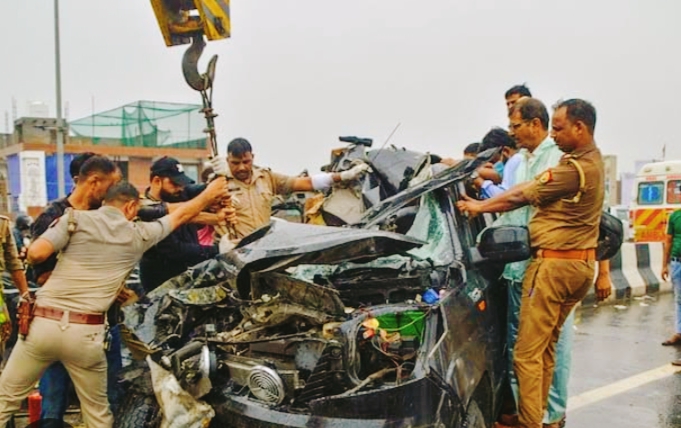
Roads in India are bad. Motorists often flout rules. Accidents, therefore, are a regular sight.
The Ministry of Road Transport and Highways (MORTH) says 70 percent of fatal road accidents happen due to speeding.
And, Mr. Nitin Gadkari, the minister for transport, said people are so negligent on roads.
It’s each individual’s responsibility to observe strict discipline while driving. One should always be on guard. With all senses open.
I wish I had the skill to spot the (most common) traps people in India fall so easily into, like cricket falling on bright headlamps.
The advanced skill that helps me (every day) spot potholes, leaking sewer holes, unmarked speed-breakers, a two-day old fallen tree, deadly blind-spots, sudden road-closures, diversions, a speeding metro truck from behind, a petrol station that’s “closed for maintenance”, a minister’s motorcade crossing, the dead-end (daily) election meetings, huge blaring speakers on either side, a falling billboard, a 15 ft cinema banner in the middle, a religious procession on foot, the auto-rickshaw in front that stops abruptly when seen a client, failed lights at junctions and a parking lot which is full (already) but without a notice.
Summer weather is my favorite. But I would like it warm, not a red-hot sun breathing down on my neck. Nice, warm and a bit sport that should help me grab a pint or two.
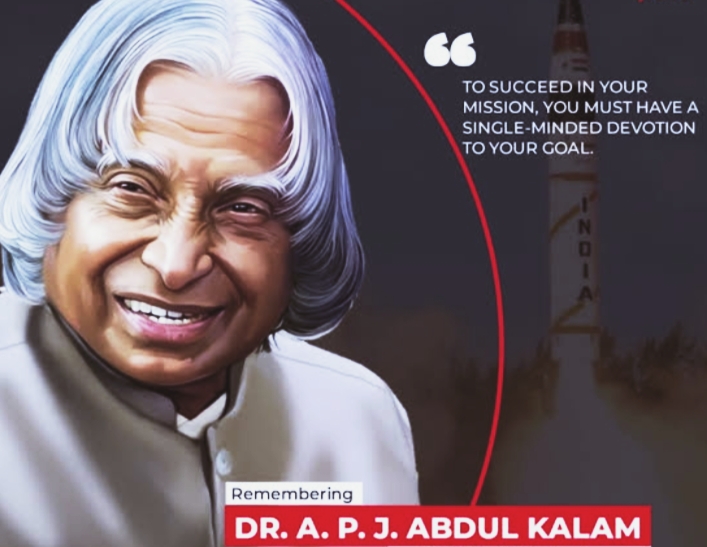
Late Dr. APJ Abdul Kalam, the former president, a scientist, an erudite scholar and an excellent teacher.
He was born into a Muslim family who lived in a remote town called Rameswaram on Pamban Island. It is a popular pilgrimage centre located in the State of Tamil Nadu, South of India.
Dr. Kalam always said he was a teacher first and a president next. Such was his love for teaching. The nation remembers him as a great role model.
He was called the “People’s President” because he asked students in the country to dream of a strong, self-reliant India. And he tasked the teachers with preparing the young towards achieving the goal.
He emphasized the importance of students developing a scientific temper and encouraged them to think independently to find solutions.
Dr. Kalam returned to teaching, writing and public service after he served just one term as president. Humility was his character and personality.
He wrote a book titled India 2020 wherein he put out an action plan that he said would take India towards achieving a developed status by 2020. It’s now 2024 and the nation is achieving the objective thanks to Dr. Kalam’s vision.
In 1997, Kalam received India’s highest civilian honour, the Bharat Ratna, for his contribution to scientific research and modernization of defence technology.
He died while delivering a lecture at the Indian Institute of Management in Shillong on 27 July 2015.
The nation remembers him not just as a scientist, scholar or the former president of India, but as a beloved teacher.
India accounts for the highest number of road accidents in the world.
Seven out of every 10 lives, or 70%, die due to speeding in India.
In an interview last month, Transport Minister Nitin Gadkari said that government intervention would not be enough unless citizens start following traffic rules more seriously.
I wish, therefore, I could do more by stopping citizens, educate them about safe driving and tell them to avoid speeding. And I hope that would help save lives on Indian roads.
One year separates me and my brother. My brother Raman was born in the month of October 1965. I was born almost a year later, in November 1966. (Please, don’t blame my parents.)
We looked similar in appearance when we were young. So identical that people found it tough to differentiate between us.
My dad worked as an engineer for the government. We lived in a remote town called Sivaganga in Tamilnadu when we were born.
We often played together. We never missed each other. It took time for our friends too to actually see who’s who. It was good fun though.
(We are now 59 years old and still many can’t call our names right!)
My brother Raman started school at five, and I missed him so much. I couldn’t wait to go to school.
A year was soon gone. Ram was now in grade two, and I had just started. In the same school.
As we were so close, I couldn’t see him sitting too far away in a different class. So I would give a miss in my class, run, sneak through and sit next to him.
That soon became a routine every day. Five days a week.
Teachers found this amusing. They sent staff and boys to bring me to my class. They used to drag me along the floor as I cried and rolled. No mercy.
When school announced the break, I would run back to where my brother sat. A classic Chaplin movie on display at school.
My parents were worried. They sat with the head teacher and staff discussing ways to stop me.
To make matters worse, my brother too joined the sit-in-protest (dharna). We both cried in buckets when staff tried separating us.
Teachers suggested various measures, ranging from punishing us to tying us with ropes to admitting us into separate schools, to some even giving a hint as to seeking a transfer for my dad. So sad.
The head teacher rolled her eyes and raked her brains. How just the two of us made the entire school sweat it out. Not a day passed without the teachers thinking about us.
A week was gone. How to separate us was now the talk of town.
My dad soon found a solution. He rushed to meet the head teacher. The staff were also joined.
If the school didn’t mind, my dad said he was ready to register his children as twins. And I could continue, from grade two, along with my brotherRaman.
That let me give a whole year a miss in grade one. Wow!
Sounds alright. The head teacher was convinced. The staff heaved a sigh of relief. Necessary paper work was to be done.
When my brother and I entered school the next day, the whole school welcomed us with claps and I was called a ‘child prodigy’. Prodigy for what?
A prodigy for giving one whole year a miss and starting school from grade two.
‘Child Prodigy’ was the best compliment I received. Sorry! WE received.
History has plenty to choose from. But there’s one I should say stands out tall among all.
He was the most revered and is kept dear to the hearts of people in Tamilnadu, India. And he was loved by people around the world alike.
Who’s he?
The year 1543, saw the birth of ‘De revolutionibus orbium coelestium’ (On the Revolutions of the Heavenly Spheres) by Nicolaus Copernicus. The mathematician-astronomer questioned the theory of the geocentric model of Ptolemy, who the Catholic Church considered ‘numero uno’.
While Ptolemy positioned Earth at the centre of the universe, Copernicus rebelled and said that the Sun is at the centre of the universe. He was penalized and asked to recant.
Then Galileo Galilei came in 1564. The Father of Observational Astronomy championed the cause of Copernican heliocentrism.
And he met (as usual) with opposition from the Catholic Church. He didn’t stop though.
The Roman Inquisition called Galileo foul in 1615 and termed him foolish, absurd and heretical.
There’s more.
Then came the Age of Enlightenment, or more precisely, the Age of Reason in Europe in the 17th and 18th centuries. That set the tone for a secular world.
Human happiness, pursuit of knowledge through reason, evidence of the senses, were central to this new reasoning movement.
Followed soon were the ideals such as natural law, liberty, progress, toleration, fraternity, constitutional government, and most importantly, a spark that called for the separation of church and state.
John Locke wrote “cogito, ergo sum” (I think, therefore I am) in 1637.
Issac Newton’s Principia Mathematica in 1687 gave birth to the Scientific Revolution in Western Europe.
Immanuel, the father of ethics, aesthetics, and modern philosophy wrote an essay titled ‘Answering the Question: what’s enlightenment?’
Louis XIV died in 1715. The French Revolution began in 1789. Monarchy died a slow death.
A variety of 19th century movements have set the tone for liberalism, socialism and neoclassicism.
Political revolutions have been the order of the day, and they have begun to question the religious authority in power.
People looked with awe at the works of Francis Beacon, Thomas Hobbes, John Locke, David Hume, Kant, Montesquieu, Jean Jacques Rousseau, Adam Smith and Voltaire.
All set. And then an idea was born in 1879 in the South of India.
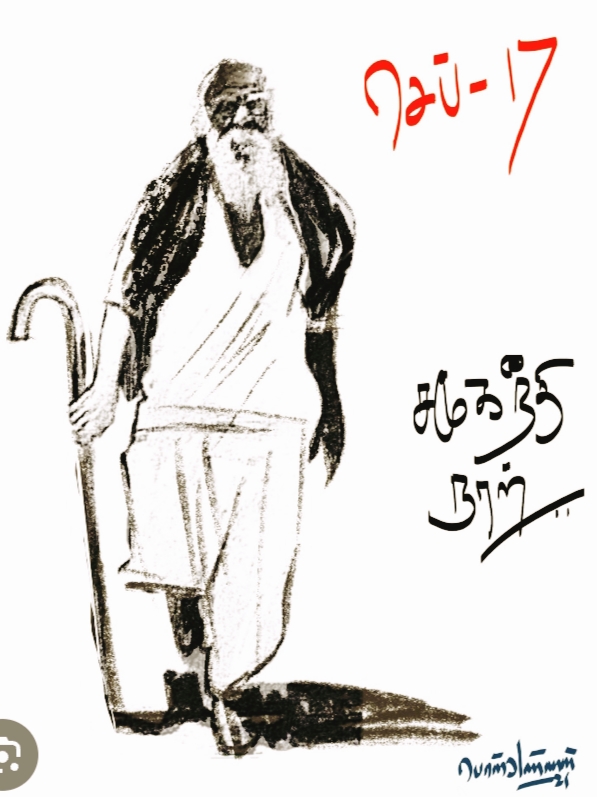
An Erode Venkatappa Ramasamy a.k.a Thandhai Periyar, was born in Erode, then a part of Coimbatore district of the Madras Presidency.
He was an Indian social activist and politician who started the Self-respect movement in 1926.
He was the founder of the Dravida Kazhagam (the Dravida Federation) and was known as the father of the Dravidian movement.
He rebelled against Brahmin dominance, gender and caste inequality in Tamilnadu.
EVeRa (as he’s known to many) promoted the principles of rationalism, self-respect, women’s rights and eradication of caste.
He opposed the exploitation and marginalization of the Dravidian people of South India and the imposition of what he considered Indo-Aryan domination.
The state of Tamilnadu celebrates his birthday on 17th September every year as Social Justice Day.
On 24 December 1973, Thandhai Periyar (the Father and the Elder for many) died at the age of 94.
But his ideals still stay fresh in the minds of people of Tamilnadu today.
He’s the one, I dare say, the most confident person I know.
What strategies do you use to cope with negative feelings?
No big strategies. Just plain reading of how our brain works. That will do.
I’ve read on the internet that our body has a natural response to both positive and negative thoughts.
Our body secretes a hormone called dopamine when we read or hear good news. India winning the test series against touring Bazball-England should make us happy. So that’s loads of bright bulbs in the brain. No damage.
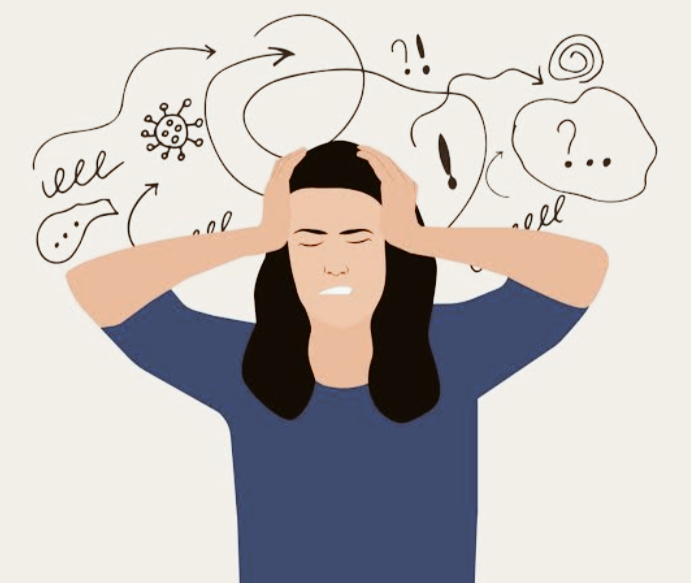
But, there’s a villain hormone at the same time. It’s called cortisol. It begins to flood the moment when you know you run to work late. And it doubles up in a deluge when you see the traffic on the road is moving too slow.
So our body basically plays both a good and bad cop. The bad guy is noticeably the dominant of the two. It’s tough calming him down.
There are no quick fixes to kill a bad thought, to say honestly. We should see the situation and act accordingly.
Give an example.
Imagine, the traffic is now cleared. You start cruising along. Suddenly, you hear the sirens and an ambulance appears quickly in the rearview. Flashing and asking the right of way. You know clearly there’s someone in need of an emergency.
How would you react? Give way or keep pressing the pedal?
Giving way should naturally be the best way to react. Because you know you should help save a person in trauma. And the law says to give priority to an ambulance.
The same is the case with all negative thoughts put together. When the thought knocks at the door, do one of the following. Without thinking twice.
Just give in.
Walk away.
Drink a glass of water and relax.
Take a cold shower.
Shut down the phone.
Take the dog out for a walk.
Visit a local store and buy some candy.
Feed the fish.
Visit the beach and watch those waves kissing your feet.
Pay the guy at the balloon stall and pick up the gun. Check how good your aim is.
Give no space for negative thoughts. At all.
Till about time your bad cop ‘cortisol’ runs completely empty. Leave no trace of him.
Life is a battle of wits. Keep calm when you win. Laugh whenever you fail.
Keep the good and give the bad cop the kick. On any day.
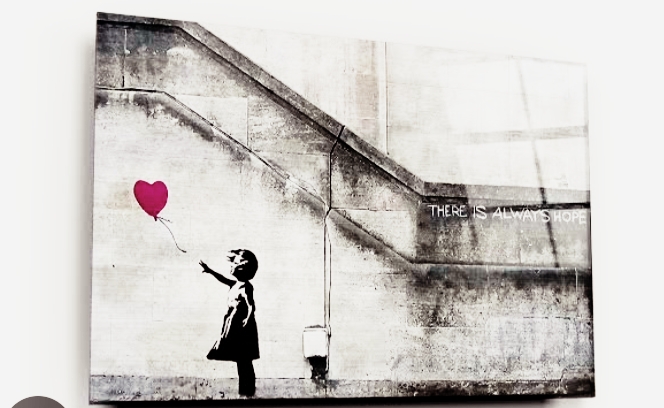
I read about Banksy, his mystery art, J.D. Salinger’s The Catcher in the Rye, Friedrich Nietzsche (Thus Spake Zarathustra) and How Bizarre by OMC. I’m lost.


 "சென்றிடுவீர் எட்டுத் திக்கும்"