Birds don’t pose for photos! You need patience!

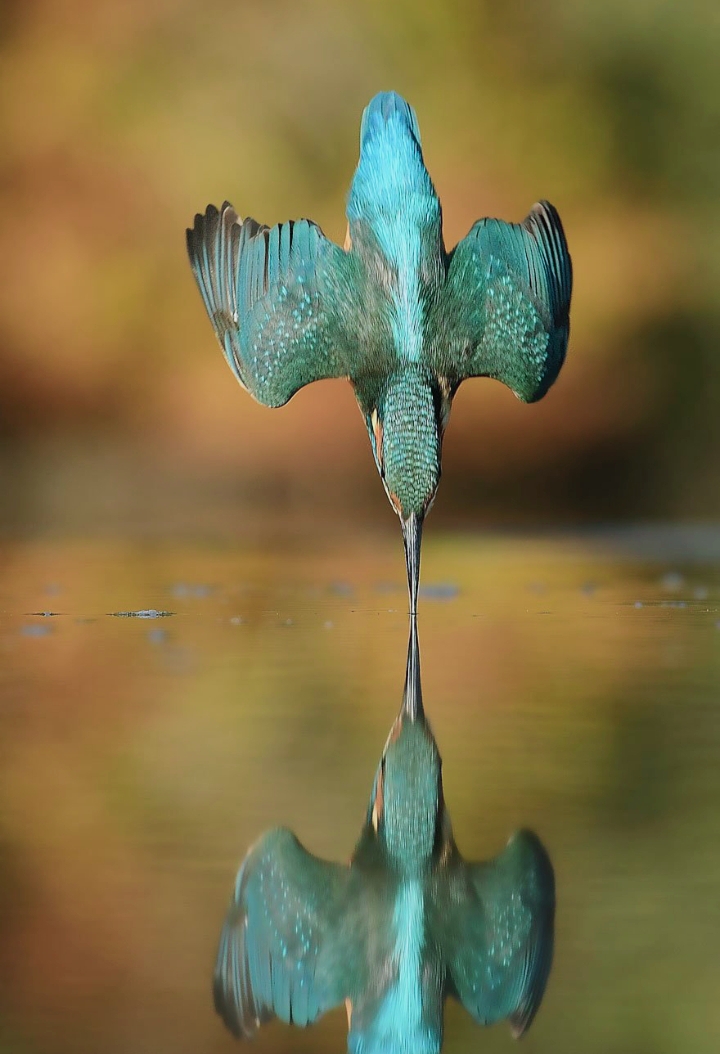
Take a look at the picture.

What you have seen isn’t just a photo of a bird. It’s a poem. How?

A bird diving 30 miles an hour into clean and still water to meet his twin brother. Without a splash of water wasted. 

This amazing photograph was captured by a fisherman-turned-wildlife photographer called Alan McFadyen. He lives in Scotland and is now running a wildlife photography business.

This photo wasn’t taken in a day. A painstaking effort went behind creating this masterpiece.

McFadyen took six long years. 4200 hours in total. He travelled every day, many miles, seven days a week to the same spot, River Tarff woodland

He would skip breakfast and miss his dates (missed many girls in the bargain). All for the love of wildlife photography. 

He got his first camera – a Nikon D4 – in 2009 and that kicked the adrenaline in him. 

He would cycle to the spot daily, set up the porch at vantage points with camouflage (birds don’t pose for photos) and click, click and click. Hours would be gone. 

He clicked 600 shots a day. A whopping 720,000 clicks in all. 

Patience paid him. 

And the passion for photography shouldn’t be any less. This is an adventure sport. Only a superhuman effort could win laurels.

It cost McFadyen his relationships. He was engaged five times. Twice divorced. 

He was six when he first fell in love with nature. His grandfather was his inspiration, as the lad was taken around on a bicycle every day to see those bird’s nests. 

That was how his love of nature kick-started and his passion for wildlife photography. 

McFadyen dedicated this one helluva masterpiece to the memory of his granddad. 
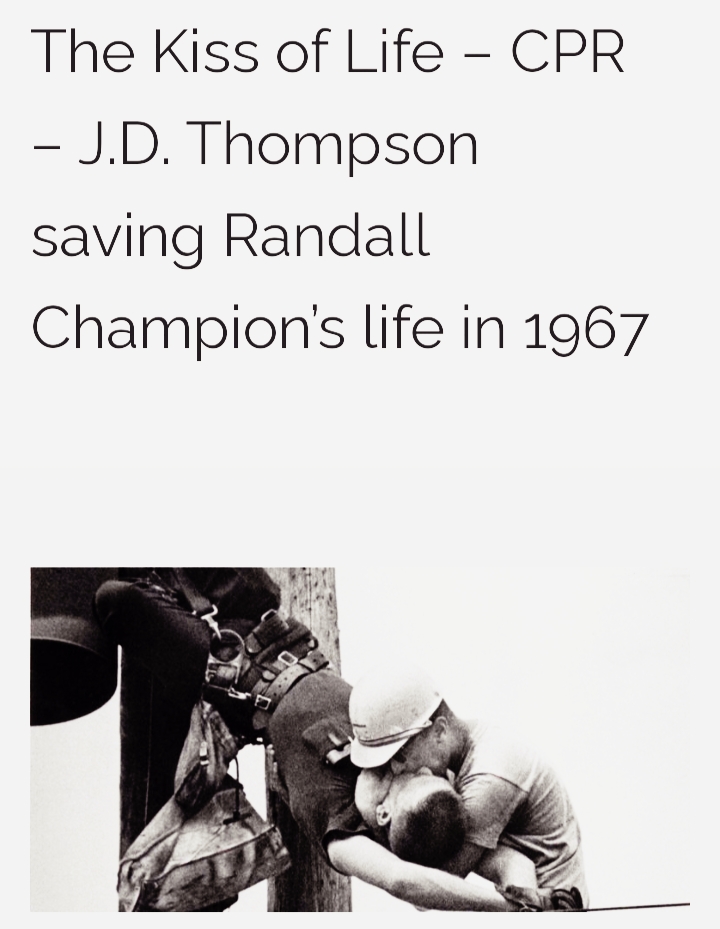
How a ‘Kiss of Life’ could help save a man from certain death?

This photo won a Pulitzer in 1968. Rocco Morabito of Florida was the photographer. 

On a dull, boring day in the office, Mr. Morabito heard a group of workers from Jacksonville Electric Authority (JEA) shouting. He saw a lineman hanging unconscious on the top of an electric high-tension power pole. 

Mr. Morabito quickly reached the spot and dialled for an ambulance. Before he could get a grip of what was going on, he took out his camera and started taking pictures. A poignant scene which he couldn’t afford to miss, as a photographer.

This linesman, Mr. Randall Champion fell unconscious after touching a 4000-volt electric wire. There was a commotion on the ground and everyone was shouting “help”

Mr. Thompson, who just saw the whole incident from about 400 ft away on the power pole, had quickly jumped to his colleague’s rescue. 

He grabbed him, pulled him off the smoking wire and gave him mouth-to-mouth CPR. At once.

CPR is short for Cardiopulmonary Resuscitation, by which a person can breathe air into the lungs of an unconscious person through mouth-to-mouth. That is to keep the injured person conscious before paramedics arrive at the spot. 

Mr. Thomson pumped air into his colleague’s lungs and checked if he started breathing. 

He indeed survived. Thank god!

Morabito stood shocked. He couldn’t believe what he was seeing. He knew he was doing one of the best assignments yet.

This picture was suitably titled ‘Kiss of Life’ and it went viral the next day. The world spoke about the picture. People spoke about what CPR was and how it could help bring a man’s life back. 

This picture is still revered as one of the best in photography.

All ended on a happy note as Mr. Champion survived, and you won’t believe he went on to live another 35 years. 

His colleague, Mr. Thomson, when asked about the heroic day he said he just did his job. He helped his friend and colleague.

In fact, this incident and the photo helped popularize what CPR was.

A ‘Kiss of Life’ is not just a guarantee of someone’s dear life, but a tiny act of kindness can save life and unite complete strangers into a life-long friendship. 

The linesmen and the award-winning photographer were friends for a long time after this incident. 

Nothing Stranger than Truth!

Describe a random encounter with a stranger that stuck out positively to you.

The year was 2004. I was new to London

I had just been there for work. My office was located on Marsh Wall Road and Canary Wharf, the famous financial district, was just 10 minutes’ walk away.

At the close of office hours, I used to take a stroll to see the place around Docklands

The Canary Wharf is home to many tall buildings, including the UK’s second tallest, One Canada Square.

Canary Wharf was a scenic beauty with a footbridge hung by wires and barely touching the waters, a huge shopping mall, seagulls flying so close to the waters in the Thames, the toy-train DLR (Dockland Light Railway) transporting commuters and visitors (in a solemn silence), the green parks & benches, punishing wind passing through skyscrapers, cycling lane and clean roads all around. It was simply a treat to watch.

I had a DSLR camera. The weekends in that part of the world are normally quieter. As one who had just landed in London, I wished to click some pictures and wanted to send them home to India.

I was snapping away all that came within my eyesight.

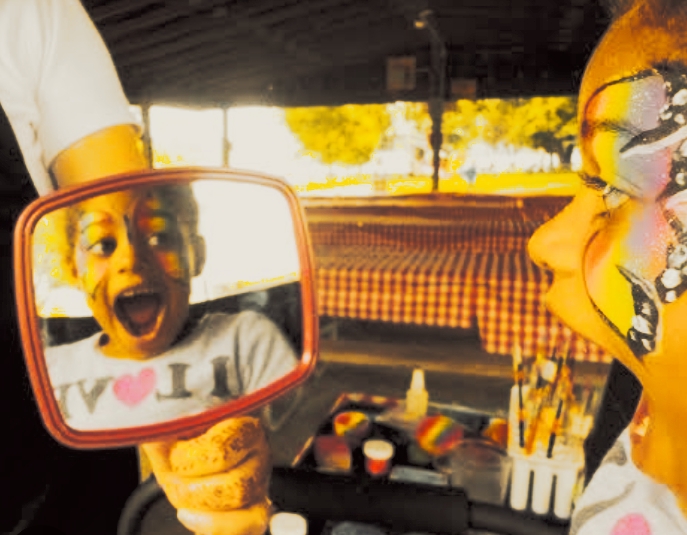
I had just stopped when I saw a group of kids getting ready for a face-painting competition

I watched them gather in groups and some sitting on tall stools. The make-up artists were busy drawing cartoon characters on their faces. I guessed an event was being organized. I didn’t want to miss one.

I started clicking. Shots of the venue, the audience, kids running, laughing and joking. I took the camera very close to the kids’ faces and clicked. The cartoon faces just began to fill my camera.

No sooner had I finished doing a great photographer’s job for the week than I was stopped by the long arm of an adult. Someone tapped on my shoulder.

“Sir, can I have a minute?” 

“Yes, sure” I said. I was a bit worried. 

The man said he was the father of one of the kids participating in the competition. And he wanted to know who I was and what business I had there.

I started sweating. Did I do anything wrong? 

I explained who I was, the reason I had been in the Docklands and told him photography was my passion.

The man who was a complete stranger warned me that I wasn’t allowed to take pictures of kids unless I carried an ID or authorized by the organizers of the event. 

Secondly, he said it was a crime to take pictures of kids without permission from parents or the kids’ guardian. I was gobsmacked! 

He told me to show him those snaps. I quickly obliged, pressed the cam on and showed him the whole sequence of my evening at Canary Wharf.

He asked me to delete each one of the kids’ photos. The other parents soon gathered. They made sure I deleted all the kids’ pictures.

I apologized and left home. It dawned on me how ignorant I was. 

That was surely a positive lesson to learn in life.