If there was a biography about you, what would the title be?

"சென்றிடுவீர் எட்டுத் திக்கும்"
World is a Global Village.
If there was a biography about you, what would the title be?
Describe something you learned in high school.
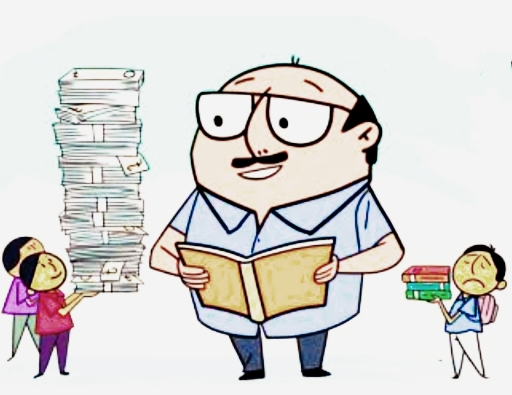
Most teachers in India advise students to attend private tutoring classes. Some take those classes themselves and collect money privately from students.
Those who opt out are threatened with failure in important subjects of study.
So most of us were just pushed into this bullying trade when we were in school.
We were further told academic excellence could only be achieved if students attend private tutoring classes.
That was a huge lesson.

“Dear god, Krishna ji, please stay with me, please keep my parents happy … please help me crack Neet 2024”.
“God teach me how to work very hard”
Those messages one never misses seeing on the wall of the Radhakrishna temple located at Kota, Rajasthan in India.
Kota in India is home to thousands of coaching centres for engineering and medical entrance examinations.
People call the city now the most stressful, as the place is known for all wrongful reasons. 27 students committed suicide last year and the number is rising.
Three have died this year. The latest being a 19-year-old engineering aspirant. RIP!
2 million students appear each year for just 140,000 seats in medical colleges in India. Over one million people compete for 10,000 seats in top engineering institutions called IITs.
Months ago, I went to a coaching centre located in Trichy, South of India.
Students study 18 hours a day, walking like zombies on the campus. Many of them sleep during class.
Teachers were mostly seen rushing through chapters and completing the job like how train drivers run between stations. Too mechanical, to say the least.
I saw a coach, an MIT, Chrompet (Chennai) alumni and an MD of a popular NEET academy breaking down in the middle of class, cry in front of students and start begging them for attention in the class.
Parents in India pay through nose (₹150,000 a year plus ₹30K for food & accommodation) for their children’s education. They place enormous hope on their wards. They want to see them as doctors or engineers, nothing less.
But there’s a sorry sight to the whole story.
Students can’t cope and they commit suicide. The pressure for them is just too much to bear.
The government is confused. While the authorities sit, discuss and contemplate measures to arrest this disturbing trend, students continue to harm themselves at these killer-centres.
Why do students resort to making such extreme ends?
Mental health issues, academic pressure and social stigma drive students to go to this extreme end – screams the article in Frontline, The Hindu.
35% of recorded suicides occur in the age group of students between 15 and 24 years, says statistics on Wikipedia.
Are students happy at home?
Studies say students who are well integrated with their families and community have a good support system during crises, protecting them against suicide.
Low levels of emotional warmth often drive them to seek a lonely spot.
A high level of parental control, or over-protection, by parents is associated with a three-fold increase in the risk of their ward’s suicidal behaviour.
How to spot them going bonkers early on?
Students nowadays pick up info about harming themselves from platforms such as YouTube and the internet.
A suicide often precedes an attempt. An early identification of what they do when they are alone and timely intervention should help stop them.
This could help in reducing suicide rates in India, experts say.
Intervention as well as a primary prevention strategy could help keep the rate of suicide under check.
Create a positive atmosphere for the children to interact freely with parents, elderly and friends.
Teach the students to cope. Tell them to learn an adaptive mechanism in life.
An awareness campaign should be spread among parents, teachers and healthcare professionals regarding child-rearing practices.
The community should frequently meet up, sit and discuss various social programs, such as child and family-supporting ones.
The community agenda may further include programs that aim at achieving gender and socio-economic equality.
Start now to see the results.
PS: the happiest lot I’ve seen at the NEET campus was the young staff working in the canteen.
They were of a similar age group. But they were more independent, carefree, employed, earning, carrying a phone, riding on bikes, socializing, cheerful and headed home by evening.
 "சென்றிடுவீர் எட்டுத் திக்கும்"