What are three objects you couldn’t live without?
1. My glasses.
2. A strip of Paracetamol
3. And a bottle of hand sanitiser.
"சென்றிடுவீர் எட்டுத் திக்கும்"
World is a Global Village.
What are three objects you couldn’t live without?
1. My glasses.
2. A strip of Paracetamol
3. And a bottle of hand sanitiser.

What experiences in life helped you grow the most?
There are plenty I can list out, but I owe it largely to the family I was born in.
My dad, mom, two brothers and a sister gave me a lot to learn. With our relatives living close by, we were a huge home-study.
(My brother-in-law, sisters-in-law and kids soon joined us in our studies and made our home almost a home-run university now).
We never missed an occasion to meet up. From celebrating the birth of babies to attending weddings, we were an entertainment ourselves. We traveled a lot to have a laugh.
I have got a lot of friends. We studied and played a lot of time together. Cricket was our favorite game.
My dad was an engineer and I have always looked to him for guidance. He never failed us.
He taught us good values and helped me get a good education in India. I am so proud.
Carrying a cuppa in hand and reading news so early in the morning was how we started the day in the 80s.
The Hindu was our family newspaper. With the Oxford English Dictionary in one hand and the newspaper in the other, our breakfast couldn’t have been any richer, each day of the week.
Dad surprised us one day by bringing home a television. It was a B&W TV.
We were just left wondering, as there were not too many television shows, let alone television stations. I listened to the cricket commentary only on the radio when India won the World Cup, in 1983.
The box therefore remained mostly shut at home. So sad.
On the advice of colleagues in my dad’s office, we put up a tall Burj-Khalifa-dipole antenna (about 18ft tall) on the terrace of our home.
All that for a one-hour weekly show called ‘Road to Wembley’, beamed from Sri Lanka. We lived closer to Sri Lanka than India when it came to watching shows on TV.
The show was a Friday special, capsuling the English Premier League football matches. It was a rage those days.
If the weather permitting, we (people in the South) were able to watch the show thanks to the tall new aluminum Burj-Khalifa on the terrace.
Evenings on Fridays soon became a ritual. We took showers, wore new clothes, visited places of worship, canceled the day’s appointments (if any) and got ready just in time for the transmission from Sri Lanka to start.
Half our family were sent up to the terrace to stand guard, roll the antenna, fine tune and try tapping whatever signal was available in the transmission, just in case.
Pat, came the reply soon when Delhi Doordarshan set up a station closer to our homes and started transmitting a one-hour UGC (University Grants Commission) educational program on TV. Seven days a week.
But the show sadly ran to an empty audience. Nothing was as captivating as ‘Road to Wembley’, by Rupavahini.
Came the 90s, the landscape in the sky changed, forever. Star TV opened up shops in India and that revolutionized watching television in Indian homes. Good god!
I’m becoming a student of mass communication, choosing a career later on as a television journalist and now a consultant in the media was largely because of my dad and the box he bought in the 80s.
Call it the idiot-box (sorry for the language), but it gave me a career for a living.
As the person I’m today, I owe a lot to my dad. And as a journalist I’ve become, I owe a lot to the box I grew up with.
Now, I miss them both.
Do you believe in fate/destiny?
Yes. One should.
Those two words decided how life came into existence on the earth.
Of the 300,000,000 (roughly) sperms ejaculated during coitus, only about 200 actually reach the oviduct. Only a lone lucky fellow out of the 200 does a further climb and dares penetrate the egg. Bravo!
Fate plays a part up to this point. No one has control over embryogenesis.
How the fellow later on grows up to become an Einstein, a Theresa, a Gandhi, a Martin Luther King or an Usain Bolt is all part of destiny. That’s very predictable though.
God made fate. Man made destiny.
Do you enjoy your job?
To quote Maynard James Keenan, I’m a lot easier to work with now than I have been in the past, for sure.
Thanks for asking.
Describe a phase in life that was difficult to say goodbye to.
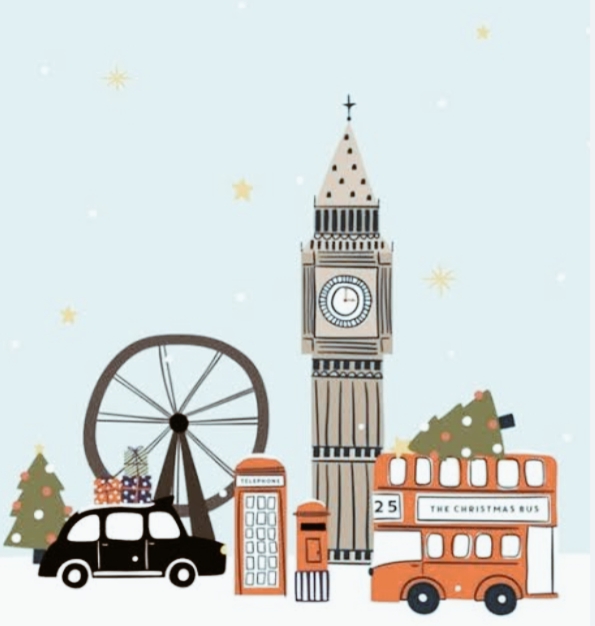
We lived briefly in the UK between 2003 and 2013.
A roller-coaster of a life, to be honest. A decent job, but low pay. Good food but expensive to stay in.
Two extremes of weather in a year. Chill in winter and hot during summer.
Clean roads. Good governance. Less pollution.
Her Majesty Queen Elizabeth was the longest serving Queen in British history.
Her son, the heir to the throne, Prince Charles, is now the reigning King. It was ‘wow’ to see Buckingham Palace.
Big red double-deck buses were a delight to watch and travel in. Their time-keeping, spot on.
Football runs through the blood of people in London. The game is a new faith in the UK.
“Drinks will be on the house” – is how the owner of the pub treats you when his favorite team wins on a Saturday or Sunday.
The Tube will be free to travel through the city on New Year’s Eve.
We saw the PM, Mr. Cameron was once waiting in the queue with others to pick up his lunch in Canary Wharf.
On his birthday in December, our son received his IDL stamp on his passport. That was a treat.
British Airways allowed an extra allowance for our luggage when we said we were traveling to India to celebrate my birthday in October.
The UK is the only country where we have had occasions to celebrate all popular religious festivals, including Christmas every year.
We would all look like Santa when it snows in December.
Though we have switched to life in India now, our memories still go back to those beautiful moments we enjoyed.
Life in the UK, therefore, is a phase that’s too difficult to say goodbye to.
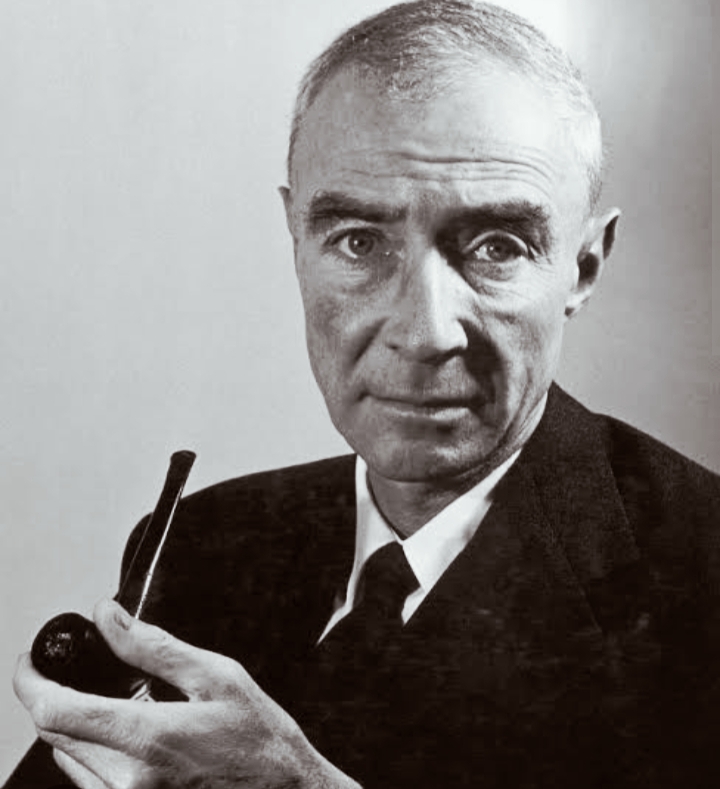
If you could be someone else for a day, who would you be, and why?
Robert Oppenheimer for a day.
For sure. But for a cause completely opposite to what he lived and stood for.
I would have nothing to do with the Manhattan Project in 1942. Nor would there be a director appointed at Los Alamos Lab in New Mexico.
Why?
No nuclear weapons could have been invented. At all.
No one would have known there was a Trinity test on July 16, 1945.
And life in two Japanese cities will be like ‘business as usual’. The world would not have seen egotists showing off in a conflict.
Bombs would have spared both Hiroshima and Nagasaki in 1945.
Many million people from the ill-fated cities would live to see a ChatGPT answering their questions about planets, the Goldilocks-zone and hope of life on distant planets.
And lastly, they would have laughed their hearts out listening to a Google-AI, Gemini calling current leaders of the world ‘incompetent’.
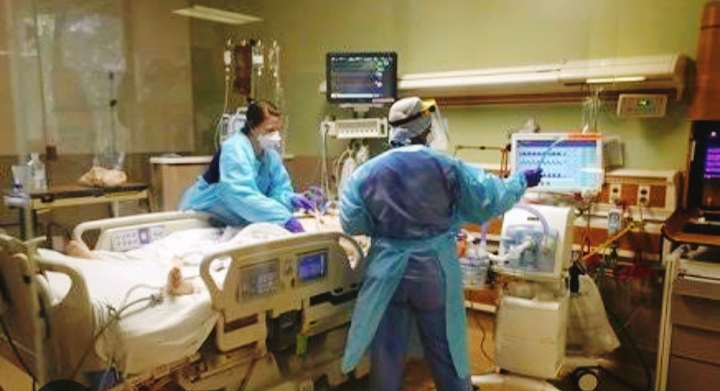
Mr. Shah is a 61-year-old retired language professor. He lived in our building with his family for a long time.
Mr. Shah has a wife, a homemaker, and a school-going daughter. His two sons were away. The elder was working in the UAE and the younger was studying in Delhi. The Shahs were a happy family.
The year was 2017.
Mr. Shah, his wife and daughter were at home watching TV when I called at his house. I was on my routine weekly visit to see the residents. I was an office-bearer at our RWS (Residents Welfare Society) and I did a lot of volunteering.
Mr. Shah was a good conversationalist. People loved having a chat with him. We usually spoke about issues concerning our society. His input had always been considered valuable by the residents.
On the day I met him, we were having a nice conversation. As we went on, I found suddenly he was going off the subject frequently and was struggling for words. He spoke with a noticeable stutter in his speech. I could see he was sweating. I panicked.
When alerted, Mrs. Shah, came running. She had a good look at him and said he would be alright if he took a rest.
Back in my home, my mind was somehow fixated on what I had just witnessed at Mr. Shah’s house. Nothing was alright with Mr. Shah, I thought.
He reminded me of what we had seen in our own family years ago. My dad died of a stroke.
I rushed to his house again. I told his wife that we should take him to the hospital for a quick check on his health.
I saw Mr. Shah was resting in bed. He was bathed in sweat. We didn’t wait for an ambulance. I took them in my car to the hospital.
The duty doctor, after checking the pulse and the conditions shown on his body, said the professor had suffered a stroke.
He further told us to rush him to Malar Fortis at once.
God! That sounded so serious. Mrs. Shah had welled up in her eyes.
We took an ambulance and rushed to Malar Fortis. Dr. Nair, the General Physician, was on duty. He took Mr. Shah into the ICU, asking us to wait.
We waited (patiently) outside. God, he should be alright.
Dr. Nair came out, took Mrs. Shah aside and asked some personal questions pertaining to Shah’s health.
She was worried, but with a sobbing note in her voice she answered him. Her phone was ringing as her family kept dialing to find out how their father was doing.
She was stuck when Nair asked what exactly the time Mr. Shah had suffered stutter in his speech.
Tense situation all around as staff nurses at the ICU waited for Mrs. Shah to answer.
No answer.
Dr. Nair said it was important to know the exact time, as the patient was carrying a blood-clot in the vessels.
The clot should be killed with a jab before it reaches his brain. So much so that the patient could be brought out of danger. Tell us the time, as calculating how much it traveled would help us spot where the clot was traveling.
Mrs. Shah was in tears, sobbing. She looked at me.
I raked my brain. I vaguely recollected someone was calling me on my phone when I met Shahs. Gotcha!
I took my phone out and ran to Nair. Pulled open the call-history and told him: Sir, the time was 17:15. Roughly about that time, I saw Mr. Shah was struggling.
Brilliant!, said Dr. Nair. Thank God!
Dr. Nair quickly wrote a prescription. Handed it to me, ordering “get the jab immediately”.
At the pharmacy (attached to Malar Fortis) I jumped a long queue. Barged in. Told everyone to excuse us, as we were in an emergency. Everyone obliged. I thanked them.
The pharmacist gave me the jab and handed me a bill. What! A jab costing ₹34K! Where on Earth would I find the money?
I didn’t have enough and neither did Mrs Shah have any. What to do now?
She looked inside her bag and checked, but not so much. Use my credit card? Yes. I paid and rushed to Nair.
The doctor took the jab and disappeared inside the ICU. Surreal atmosphere at Malar Fortis.
Mrs. Shah looked at the giant clock kept in the lobby of the hospital and prayed.
About an hour was gone. The doctor came out and told us the patient was doing alright.
Thank god!
We were so thankful to the medical fraternity that our professor was back kicking and alive.
Mrs. Shah was happy dialing everyone to say the good news. Her sons and daughter were happy. They thanked everyone. I could hear her sons and daughter crying and sobbing while thanking me on the phone. I said thank the doctors and thank the almighty.
Back at home, our society called for a quick meeting to thank me for the timely help I extended to save professor Mr. Shah.
Celebration and congratulatory messages started pouring in. On the phone and on my WhatsApp. I was gobsmacked.
A joke that is doing rounds now in our society is; whenever you hear someone is in need of help or in an emergency, you should dial our in-house doctor, a kinda DIY. Period.
The whole of our street now knows my contact.
Proof, a DIY (Do it Yourself) act can take you really far.
If you could permanently ban a word from general usage, which one would it be? Why?
You won’t miss a Youtuber today. He/she should be everywhere. Sitting next to your house, a co-traveller on the bus or on the tube, a parent right across the table filming their kid eating, a motorist whizzing past your car, a couple on the seashore posing against surging waves quite unmindful of you present and a cop filming himself issuing a ticket to you for a traffic violation. Bizarre!
They all have a mission on hand. Carry a smartphone, turn on the camera and start filming.
Film whatever moves and emits a noise on Earth.
And hell! You watch them coming up on screen in a jerky, jump-cut, jarring, boring and long video on YouTube, every day. Crazy!
Many cram their loudmouthed, dimwitted and cut-not-to-a-grammar production on another similar (madding crowd) platform called TikTok.
All have one thing in common. They’re amateurs. Not trained to shoot a video or checked through a well-scripted audition.
They call it citizen journalism.
As the media in the world have gradually evolved over many hundred years, from radio, print, television, digital and social media, people have suddenly seen an untapped space in independent media. A free space to say anything. Do anything. And show anything.
And address themselves proudly as ‘Youtubers’.
That’s alarming!
But freedom of speech has often been misused here. Scholars debate now if censorship should be enforced on these free-roaming citizen-journos who show no regard to the ethics of filmmaking.
The debate is raging. And for that reason, therefore, please ban the word ‘Youtuber’ from general usage. Period.
What is the biggest challenge you will face in the next six months?
Allow me to rephrase the question: What is the biggest challenge I and my nation will face in the next six months?
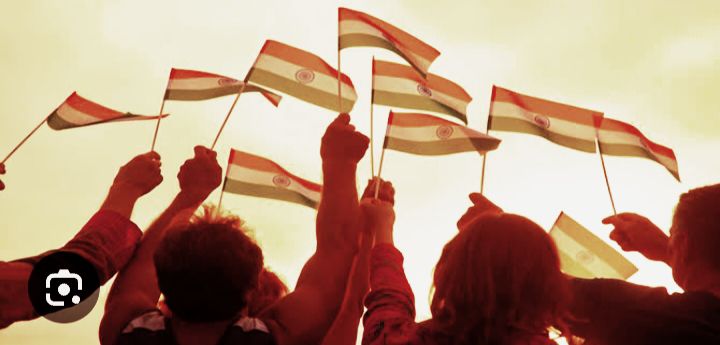
Our nation, India, is gearing up for the general election between April and May 2024 to elect new members for 543 Lok Sabha seats in Parliament.
I shall be looking forward to a feverish campaign nationwide by political parties of all hues and colors.
This election is going to throw some huge surprises though, as the country is now divided between people who continue to call India a secular democratic country and those who seek to create a new nation which holds religion and faith supreme.
Who will win this time will create a new path for India. To achieve the objective, we as citizens face a huge challenge: which way should I take India forward?
The current government at the center, headed by PM Mr. Modi has been ruling the nation since 2014 and is rooting for a third term in a row. A hat-trick performance is what his party Bharatiya Janata Party (BJP) is aiming at.
But the leaders of the opposition have come together and formed an alliance in the name of the I.N.D.I.A (INDI Alliance). They are more determined this time to stop the juggernaut of the ruling NDA.
While the National Democratic Alliance (NDA), led by the BJP is strong in the north of the country, the opposition alliance (INDIA), on the other hand, is putting up a better show in the South.
The next six months, therefore, is indeed a challenge for the political leaders and the citizens, alike. Each of us has a vote that’s going to seal the fate of a nation of 1.43 billion people.
Do join us and help in our prayers for a more vibrant and stronger India.
Isn’t that a challenge?
What advice would you give to your teenage self?
Tell you a short story I read on the internet.
A long time ago, at the beginning of the 20th century, a Scottish farmer was returning home. He heard someone crying for help.
He saw a boy struggling in the water. He was drowning. The farmer quickly found a long branch of a tree and threw it to him. The boy picked up the branch and swam to safety.
The boy was safe, but he couldn’t hold back his tears for a long time. He was shaking.
The farmer told him to calm down and asked him to come home so that he would offer him some warm clothes.
The boy said no as he was worried his dad back home must be worried and waiting.
He thanked the farmer and left.
And the next day, a carriage came to the farmer’s house.
A well-dressed gentleman jumped out and asked if he was the one who had saved his son. The farmer said, yes he was.
The man asked how much he owed.
The farmer said he did what a normal person should do and, therefore, he owed nothing at all.
The man insisted he should say an amount as his son was so dear to him.
The farmer wasn’t interested and turned to leave.
As the conversation was going on, the farmer’s son appeared and stood surprised at the door.
The gentleman asked if that was his son. The farmer said yes as he was putting his hand out to pat the boy on the head.
The man continued. He said to take the farmer’s son to London and pay for his studies. If he was as noble as his father, then neither he nor the farmer would regret their decision.
Years have gone by.
The farmer’s son graduated from school, a medical school, and soon his name became universally known as the man who discovered penicillin.
He was none other than Alexander Fleming.
The name of the gentleman who took the farmer’s son Fleming to London was Randolph Churchill.
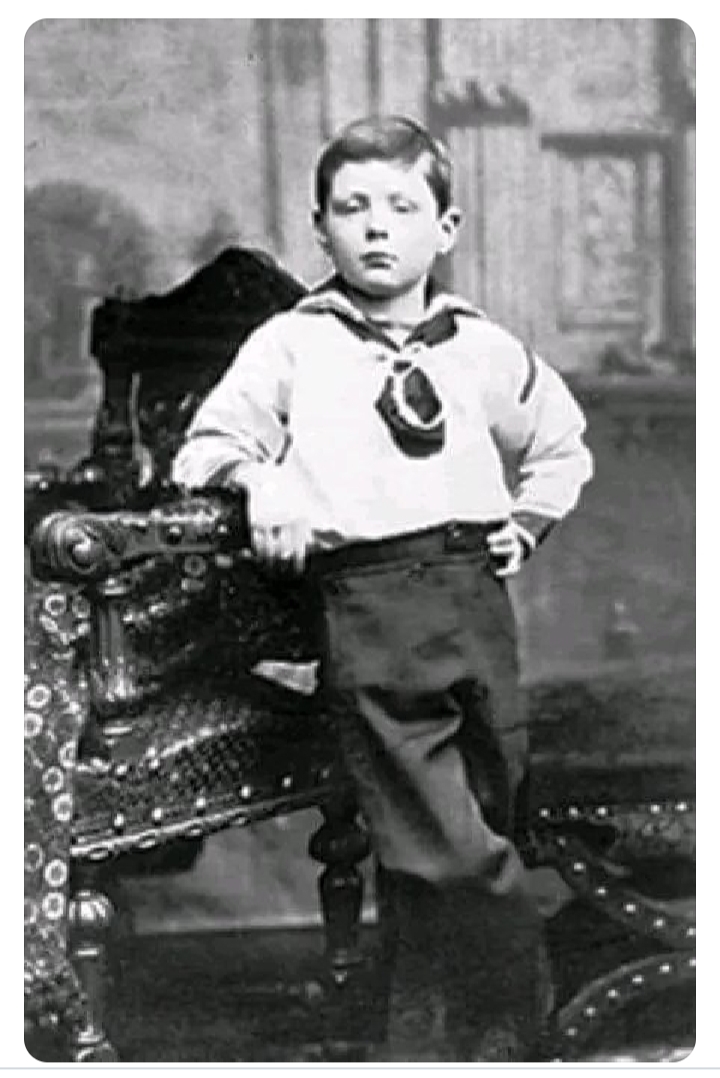
And the man’s son was Winston Churchill, who later became Prime Minister of England.
There were occasions when Winston Churchill recalled saying: “What you do will come back to you.”
 "சென்றிடுவீர் எட்டுத் திக்கும்"