Know Your Rights! How?

What’s something most people don’t understand?

We often see people giving no two hoots about other peoples’ privacy. Nor do they give a damn about respecting others.

As the world is now reduced to a smartphone, we see people glued to social media such as FB, X (formerly Twitter), Instagram and YouTube. The result is reality is out gone for a toss.

I have been to a coaching academy, based in Trichy, Tamilnadu, recently as a mentor. Students I found there were a lot ill-disciplined.

They pay no attention in class. They sleep. No hygiene. Nor do they give respect to the teachers and staff. And the parents always say their wards are right.

Come home to my building in Chennai, Tamilnadu. We have a functioning association under the Residents Welfare Society act. But people don’t pay the maintenance charges on time. They don’t keep the surroundings tidy and clean.

The traffic in India is one of the worst in the world. There’s no such thing here as a bus-lane. No limited hours. Nor do the authorities collect congestion tax like the one we see in the US and in the UK.

You can see people always rushing through traffic and creating confusion. Because they often run to school and office late or miss the time of scheduled meetings.

People are nosy in our neighbourhood. Gossiping is routine. Invasion of privacy is just an everyday affair.

It’s election time in India now. Politicians reap a heavy harvest of people’s innocence. They promise heaven while campaigning and do nothing after grabbing seats in the August houses of Parliament.

Knowing your rights is what people need now. When will they understand?


A Character in Wild-pants!

When you were five, what did you want to be when you grew up?

When we were five, we were mostly dreamers. A dreamer with eyes wide open. A dreamer deep asleep.

I was too young to think of what I would become as I was told a lot of stories about animals and characters in cartoons. I lived purely in an imaginary world. A fairy tale life, to be precise.

I enjoyed listening to those stories and I imagined I would one day go meet them really and want to spend time with them.

Some stories wouldn’t end well as characters were chased and put to death. That gave me nightmares.

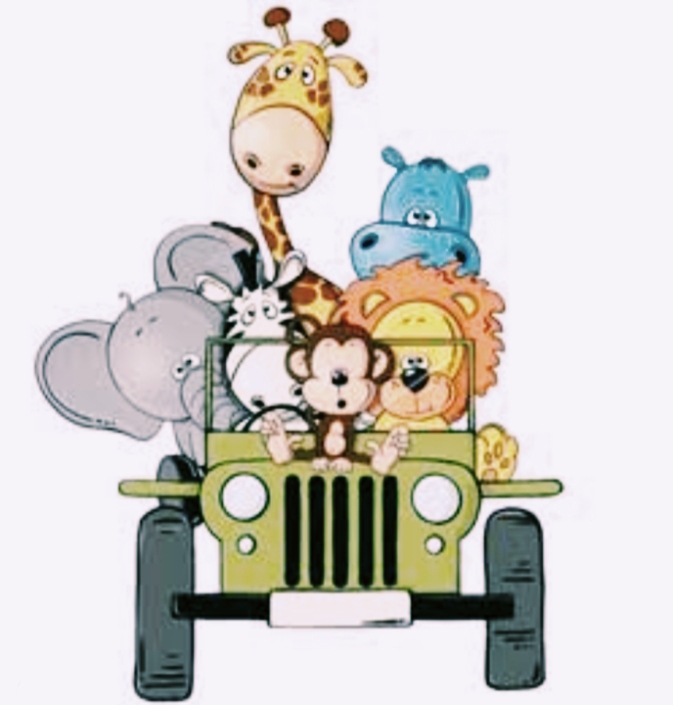
I remember I asked my parents one day if I could stop people killing animals. My parents told me that I should then become a forest officer, wear a uniform, carry a gun and travel in an open jeep. All day and night. A life in the wilderness

That’s when I imagined I would be an officer who was out and about helping save the animals.

That gave me pleasure. I thought I would bring those animals home, live with them in the comfort of my parents, brothers and sister.

A happy cartoon family was what I wanted.


When did ‘Whats Up?’ become a WhatsApp since?

How has technology changed your job?

When we studied Mass Communication and Journalism in the late 80s, many of us wanted to work in print, on the radio or assist cinema directors.

The copywriter’s job didn’t pay very much. They gave us copies to write about ₹200 ($2) worth of di-pole television antennas. Disgusting!

Television hit India big in the mid 90s. A lot of us could find jobs in the news and entertainment television. The job paid us well.

We were just about halfway through mastering the analogue format of broadcasting and the digital world hit us blind.

4:3 (aspect ratio) gave way to 16:9. All in a blink. Star Group’s Channel V was a rage among the younger music-loving audience. People watched MTV-grind till late at home.

Tapes were gone and we carried large disks. Digitization was a jiffy. Edit at a low resolution and make the master copy in high-res. Multi-layering helped insert cut-away shots quickly. Broadcasting soon became 24/7.

Social media came like a deluge. That hit us big. We were threatened with job losses at Y2K. We sat clueless many times.

Machines have become smaller and one machine (Fire, Flint and Finalcut Pros) did it all. From scripting, sequencing, digitizing, editing, keying, GFX, sound-mixing, titles and mastering. All from the word GO!

The cameras have a lot of pixels to offer. Technicians shot many episodes on a given day.

Citizens journalism is the new kid in town. Thanks to an explosion called YouTube.

The tool for shooting a film sequence is now just a phone. A smartphone is your pocket broadcaster. All credit to technology. 

Amateurish pan-shots. Bad cuts. Jump videos. Poor quality soundbites. No ‘rule of third’ in the composition. Long boring stories. Unethical content. No age-appropriate certificate.

And the greater casualty is the watershed at 9pm was gone. Anyone can watch anything, anytime.

YouTube has become the broadcaster’s market for cheap goods. Made in China.

The ‘cheaper a dozen’ market now has around 2.6 billion (about 250 crore) active users per month.

More than 114 million (about 12 crore) active channels.

People upload 2,500 new videos every minute and more than 150,000 videos are available on your phone every hour. There’s no stopping a video on YouTube.

The last time we heard about an assembly line of a product was when Henry Ford made cars.

Such is the scale of spoil in the mind of an avid video-watching kid.

Ryan Kaji is a nine-year-old boy from Texas. He has over 29 million subscribers on his YouTube channel, Ryan’s World. In 2020, Kaji earned nearly $30 (about ₹3 crores) million from his channel. All he does is review toys for kids.

We lost the race a long time ago, thanks to the arrival of technology. IMHO!

PS: Today I could sit and ask an AI (ChatGPT) to write a brief about how technology affected an editor’s or a news producer’s job in the television industry. But, why?

This is the only time I could give the AI some rest and do a job that’s genuinely mine. So I’ve chosen to write one myself.

Thanks for reading.


Wish I had ‘braved the weather’.

What’s a secret skill or ability you have or wish you had?

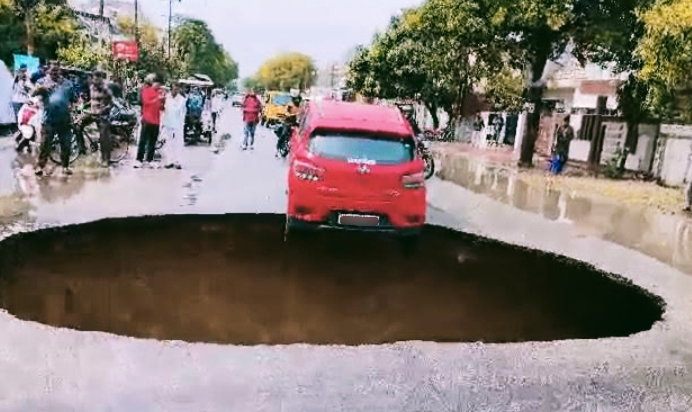
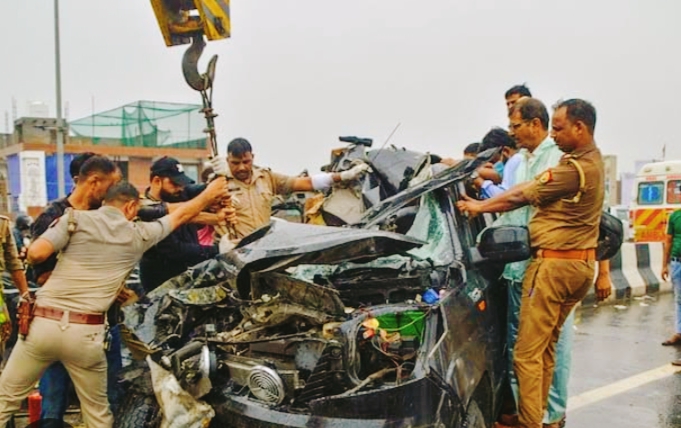
Roads in India are bad. Motorists often flout rules. Accidents, therefore, are a regular sight.

The Ministry of Road Transport and Highways (MORTH) says 70 percent of fatal road accidents happen due to speeding. 

And, Mr. Nitin Gadkari, the minister for transport, said people are so negligent on roads. 

It’s each individual’s responsibility to observe strict discipline while driving. One should always be on guard. With all senses open.

I wish I had the skill to spot the (most common) traps people in India fall so easily into, like cricket falling on bright headlamps.

The advanced skill that helps me (every day) spot potholes, leaking sewer holes, unmarked speed-breakers, a two-day old fallen tree, deadly blind-spots, sudden road-closures, diversions, a speeding metro truck from behind, a petrol station that’s “closed for maintenance”, a minister’s motorcade crossing, the dead-end (daily) election meetings, huge blaring speakers on either side, a falling billboard, a 15 ft cinema banner in the middle, a religious procession on foot, the auto-rickshaw in front that stops abruptly when seen a client, failed lights at junctions and a parking lot which is full (already) but without a notice.

Can I?

Missing You a ‘Pig’ Time!

Doctors have, for the first time, transplanted a genetically modified pig kidney into a living human patient. And the patient is recovering well after surgery.

Surgeons in a Massachusetts hospital transplanted a pig kidney into a 62-year-old patient on March 16.

As there’s a huge lack of human organs available for transplant surgery, doctors have now turned to help from scientists.

CNN reports that eGenesis, is a biotechnology company that’s developing human-compatible engineered organs. The company supplied the kidney for the patient. They said scientists have performed 69 edits to the pig DNA, to make it compatible with human beings.

Genetically engineered pigs now provide huge hope for patients who suffer from chronic kidney diseases.

The patient mentioned has a history of type 2 diabetes and high blood pressure.

He had been on dialysis for seven years before undergoing a human kidney transplant in 2018.

As the transplanted human organ showed signs of failure after five years, he switched to restarting dialysis in 2023. This caused serious complications.

No human kidney was available for at least another six years.

What was the best option left for him? He can’t die.

“I saw it not only as a way to help me, but a way to provide hope for the thousands of people who need a transplant to survive,” the patient said in a statement.

“The patient would have had to wait five to six years for a human kidney. And he would not have been able to survive it,” said Dr. Winfred Williams, associate chief of the nephrology division at the hospital for The New York Times.

That begs a question. Will this technological advance help address many patients who are in need of a transplant?

Source: www.scientificamerican.com

Edit: Dear readers, we have an update on this story. The 62 year old patient Mr. Slayman has died owing to complications unrelated to the transplant according to the Massachusetts Hospital sources. Heartfelt condolences. Let’s pray his soul rests in peace. Thank you.


A Beloved Teacher.

Who was your most influential teacher? Why?

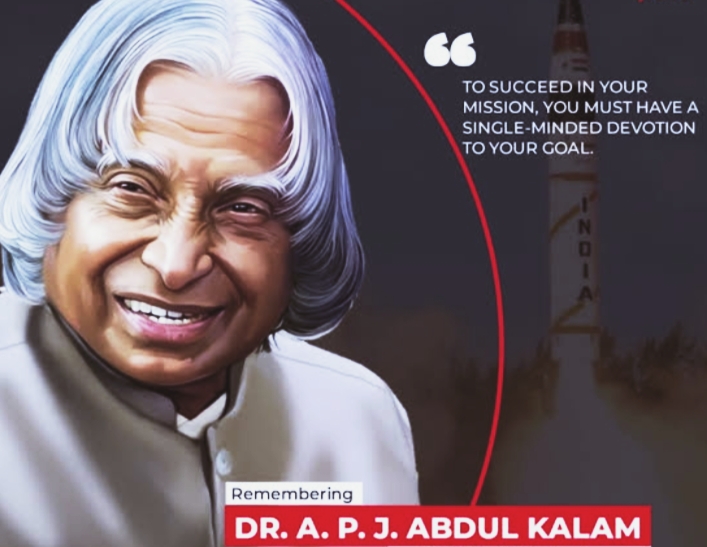
Late Dr. APJ Abdul Kalam, the former president, a scientist, an erudite scholar and an excellent teacher.

He was born into a Muslim family who lived in a remote town called Rameswaram on Pamban Island. It is a popular pilgrimage centre located in the State of Tamil Nadu, South of India.

Dr. Kalam always said he was a teacher first and a president next. Such was his love for teaching. The nation remembers him as a great role model.

He was called the “People’s President” because he asked students in the country to dream of a strong, self-reliant India. And he tasked the teachers with preparing the young towards achieving the goal.

He emphasized the importance of students developing a scientific temper and encouraged them to think independently to find solutions.

Dr. Kalam returned to teaching, writing and public service after he served just one term as president. Humility was his character and personality.

He wrote a book titled India 2020 wherein he put out an action plan that he said would take India towards achieving a developed status by 2020. It’s now 2024 and the nation is achieving the objective thanks to Dr. Kalam’s vision.

In 1997, Kalam received India’s highest civilian honour, the Bharat Ratna, for his contribution to scientific research and modernization of defence technology. 

He died while delivering a lecture at the Indian Institute of Management in Shillong on 27 July 2015. 

The nation remembers him not just as a scientist, scholar or the former president of India, but as a beloved teacher.

Make Indian roads safe for driving.

What do you wish you could do more every day?

India accounts for the highest number of road accidents in the world.

Seven out of every 10 lives, or 70%, die due to speeding in India.

In an interview last month, Transport Minister Nitin Gadkari said that government intervention would not be enough unless citizens start following traffic rules more seriously.

I wish, therefore, I could do more by stopping citizens, educate them about safe driving and tell them to avoid speeding. And I hope that would help save lives on Indian roads.

I wish I could do it every day. 


Have snakes come as saviours to save the planet, Earth?

An Indian food delivery company was in the news recently. For all the wrongful reasons. 

They planned to introduce a ‘pure vegetarian fleet’ to supply food to vegetarian customers in India.

The company CEO Deepinder Goyal announced that the ‘Pure Veg Fleet’ will wear green uniform instead of the usual red while delivering.

People in general were outraged when he said they would not deliver food from any restaurants that serve eggs, fish, chicken or any sort of meat.

The social media soon joined in the fray. They were up in arms, calling the new fleet discriminatory.

The issue died only when the CEO of the company apologized and retracted the statement. 

Mr. Goyal said on X (formerly Twitter) that his company rider’s physical safety was of paramount importance. He further said the new (mis) adventure might put his customers into trouble with their homeowners.

Sheikh Salauddin, president of the Indian Federation of App-Based Transport Workers union, criticized Goyal’s announcement by saying that he was going to categorize delivery partners on the lines of caste, community and religion.

Well, that asks a bigger question: Is India actually a majority vegetarian nation?

They have a very strange order among them. They eat no flesh, but live with roots and rice and milk. – wrote Ralph Fitch, an English traveller to India in the year 1580.

The ancient Vedas, Dharmashastras, Manusmiriti, Puranas and Thirukural (the famous Tamil couplet) have mentioned more about the benefits of being vegetarian than meat-eating.

But India, as the world knows, has historically, been a meat-eating nation with widespread forests, animals, fish and birds. Archaeological finds from the Harappan civilisation show people consumed meat.

Later, as Jainism and Buddhism spread, vegetarianism became more common. And Hindus have embraced vegetarianism.

Now, a third of India eat vegetarian food. But, strangely, vegetarians among the Hindus mostly belong to the upper-caste.

The controversies don’t end so soon.

The same food delivery company kicked up a row in West Bengal as Muslim delivery agents of the company struck work by refusing to deliver pork items to customers. The Hindu delivery agents soon followed suit. They opposed delivery of beef to customers.

As this is dragging on forever, people in South East Asia and China have shown a liking for a new recipe. 

Technology Networks have recently published a news item people might find scary. Caution!

(Trigger Warning: Readers are advised caution as the content might sound offensive to some).

Farmed pythons may offer a sustainable and efficient new form of livestock to boost food security, according to new research from Macquarie University.

Snake meat is white and very high in protein, says Dr Daniel Natusch, who led the study done by two South-East Asian commercial python farms.

Dr. Natusch is an Honorary Research Fellow from the School of Natural Sciences attached to Macquarie University.

The multi-institutional research team included scientists from Macquarie University, the UK’s University of Oxford, the University of Adelaide, Johannesburg’s University of the Witwatersrand and the Vietnamese Academy of Science and Technology in Hanoi.

They found pythons convert feed into weight gain (remarkably) more efficiently compared to conventional livestock such as chickens and cattle.

“Our study suggests python farming complementing existing livestock systems may offer a flexible and efficient response to global food insecurity”, the university concludes.

Though it will take a long time for the Western world (and the palates in India) to culturally adapt to the thought of eating snakes, it’s important to consider an alternative protein source to mitigate global food insecurity.

Have snakes come as saviours to serve the cause? – is the most pertinent question now.

 

H2O in a Beer Can. Worth ₹160 crores. Say Cheers!

“Liquid Death” is just water in a can, screams the NBC Business News headline.

The new water can is now a rage in the US and in the UK since its creation in 2017. The brand is now valued at $1.4 billion (about 160 crores in Indian rupees).

The news release says the brand Liquid Death had seen “triple-digit” growth for the third consecutive year, becoming the fastest-growing water and iced tea brand, citing SPINS, a market research group.

Liquid Death took off in part because it was a subversion of all the tropes of bottled water marketing that we’re familiar with, according to founder and CEO Mike Cessario.

The name “Liquid Death” refers to the idea of “murdering your thirst,” as well as “death to plastic,” he says.

(Reminds fans in India of the launch of Coke brand Thums Up, with a tagline reading, ‘Taste the Thunder’, doesn’t it?)

The good news is Liquid Death beverages are packaged in an aluminium can and are recyclable.

The brand now has a commanding fan following on social media, with 5 million on TikTok and 2.9 million on Instagram. And the number is growing.

“The Liquid Death can, to be blunt, looks cool,” says Brad Avery, senior reporter for industry newsgroup BevNET, told NBC News in an email.

By putting non-alcoholic beverages in a package that looks like a beer can, he said, it creates a psychological effect of making it easier for someone more image-conscious to consume.

One inspiration for Liquid Death came when I learned that some musicians who preferred to drink water onstage were pouring it into energy-drink cans for fear of embarrassment, as well as sponsorship requirements, says Cessario, the CEO and founder.

“We first invested in Liquid Death because we believed their brand and community was a great fit for the world of live music,” Live Nation CEO Michael Rapino said in a statement to NBC.

Liquid Death’s appeal means it is poised to take market share from both the water market, the beer and the newly growing non-alcoholic drink market, said Dan Buckstaff, chief marketing officer of SPINS, the market research group.

‘Can vs Plastic’ is what hit that sweet spot, Buckstaff said.

A healthy beverage for all on party occasions is how the brand wins hearts, says Cessario.

Three cheers to a can of ‘Liquid Death’.

https://www.nbcnews.com/business/business-news/liquid-death-became-billion-dollar-beverage-brand-rcna143037?cid=sm_npd_nn_tw_ma&taid=65fa89859032a700017b6fc5&utm_campaign=trueanthem&utm_medium=social&utm_source=twitter